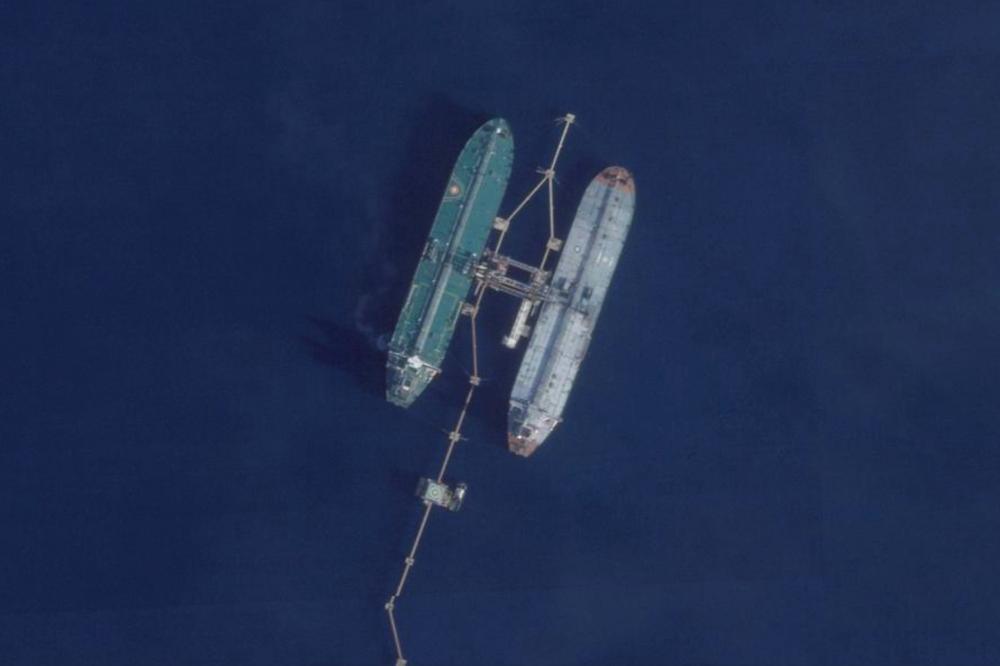

Senior Democratic lawmakers and at least one Republican have condemned Wednesday’s seizure of a Venezuelan oil tanker off the nation’s coast, with one saying Donald Trump is “sleepwalking us into a war with Venezuela”.
There is growing, at least somewhat bipartisan unease in Washington over the administration’s escalating military posture in the region. Trump has accused Venezuela of facilitating drug trafficking, and increased the US military presence in the Caribbean to a level not seen in decades. The administration has also conducted a campaign of bombings of alleged drug boats, killing more than 80 people so far.
Trump confirmed the tanker seizure shortly after it occurred, telling reporters: “We’ve just seized a tanker on the coast of Venezuela – large tanker, very large, largest one ever seized, actually.” When asked what would happen to the oil, Trump responded: “We keep the oil, I guess!”
Related: What do we know about the oil tanker seized by the US off the Venezuela coast?
Senator Chris Van Hollen of Maryland, who serves on the Senate foreign relations committee, said the tanker seizure indicated the administration was being dishonest about its military operations in the region.
“This shows that their whole cover story – that this is about interdicting drugs – is a big lie,” Van Hollen said. “This is just one more piece of evidence that this is really about regime change – by force.”
Rand Paul, a Republican senator of Kentucky, told NewsNation that “seizing someone’s oil tanker is an initiation of war” and questioned whether “it’s the job of the American government to go looking for monsters around the world, looking for adversaries and beginning wars”.
Chris Coons, a Democratic senator, said he was also alarmed at the administration’s actions, telling the station: “I have no idea why the president is seizing an oil tanker and I’m fairly gravely concerned that he’s sleepwalking us into a war with Venezuela.”
Mark Warner, also a Democratic senator, highlighted what he characterized as inconsistent priorities, posting on social media: “So they can seize an oil tanker, but not a drug boat?”
Chuck Schumer, when asked by CNN whether he opposed Trump’s goal of regime change in Venezuela, refused to answer, saying Trump’s erratic messaging made it impossible to know his true intentions.
“The bottom line is President Trump throws out so many different things in so many different ways, you don’t even know what the heck he’s talking about,” the Senate minority leader said.
“Obviously, if Maduro would just flee on his own, everyone would like that,” he said, but added the lack of clarity made it impossible to endorse specific policies.
The attorney general, Pam Bondi, said the FBI, Homeland Security Investigations and the Coast Guard had executed a seizure warrant for the vessel, which she said had been transporting sanctioned oil from Venezuela and Iran for years as part of a network supporting foreign terrorist organizations.
Venezuela’s government called the seizure “a blatant theft and an act of international piracy”, claiming it revealed that US aggression has “always been about our natural resources, our oil, our energy”.
Not all were opposed. When Ted Cruz, a Republican senator of Texas, was asked for his reaction on the oil tanker seizure, he deflected and said Trump was saving American lives by targeting drug smugglers.
In November, when Iran seized a Marshall Islands-flagged tanker in the Strait of Hormuz, US Central Command condemned it as a “blatant violation of international law” that undermined freedom of navigation and commerce.
Adam Schiff, a Democratic senator from California, called it a “very dangerous escalation and a prelude to potential conflict”. Last week he and Paul, along with fellow senators Tim Kaine of Virginia and Schumer, filed a war powers resolution aimed at blocking the administration from military engagement with Venezuela without congressional approval.
The administration has deployed what it describes as the largest naval presence in the Caribbean since the Cuban Missile Crisis of 1962, ostensibly to target what Trump has dubbed as “narco-terrorists”. But US drug enforcement officials noted in a May report that fentanyl primarily enters the US through Chinese producers and Mexican criminal organizations, while cocaine mainly comes from Colombia, Peru and Bolivia.