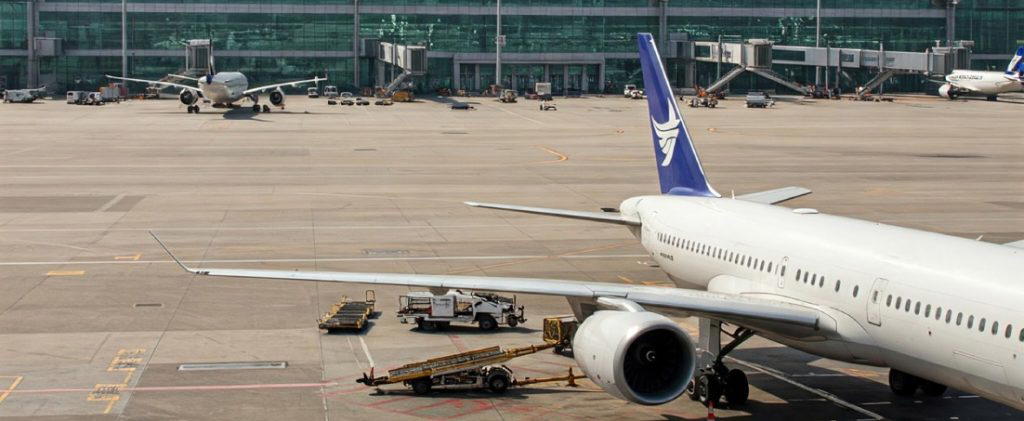

Air travel has become an essential pillar of the global economy, with airports around the world growing into some of the largest transportation hubs, moving people, goods, and ideas faster than any other mode of transport
But what does it mean to call an airport “the largest”? Is it the sheer land area, passenger traffic, or the size of the terminal? This article focuses on land area while offering quick context on what makes each major airport distinctive.
Below are the top 10 largest airports in the world (2025)—with key facts and a short note on what makes each one unique:
Top 10 Largest Airports in the World by Land Area (2025)
1. King Fahd International Airport (DMM) – Dammam, Saudi Arabia
Size: 776 sq km
The largest airport in the world by land area—nearly the size of New York City. Despite its enormous footprint, only a small portion is actively developed. Designed with long-term expansion in mind, it reflects Saudi Arabia’s vision for future aviation growth.
2. Denver International Airport (DEN) – Denver, USA
Size: 135.7 sq km
The biggest airport in North America, famous for its tent-like terminal roof and expansive runways. Its high-altitude location and vast land area make it ideal for future expansion and efficient traffic flow.
3. Dallas/Fort Worth International Airport (DFW) – Dallas, USA
Size: 69.6 sq km
A major hub connecting the world through Texas. Consistently ranked among the busiest airports globally. Its five terminals operate like a small city, complete with hotels, transport networks, and large-scale logistics operations.
4. Orlando International Airport (MCO) – Orlando, USA
Size: 69.6 sq km
Once a military airfield, now the gateway to Florida’s massive tourism industry. The airport’s design prioritizes visitor comfort, reflecting its role as the entry point for millions of vacationers.
5. Washington Dulles International Airport (IAD) – Washington D.C., USA
Size: 52.6 sq km
A key East Coast international gateway serving the U.S. capital region. Known for its iconic Eero Saarinen-designed terminal and its extensive runway system.
6. Beijing Daxing International Airport (PKX) – Beijing, China
Size: 47 sq km
Nicknamed “The Starfish” due to its distinct radial design. It houses the world’s largest single-terminal building. Built to handle up to 100 million passengers annually, it is central to China’s aviation future.
7. George Bush Intercontinental Airport (IAH) – Houston, USA
Size: 44.5 sq km
A major hub for United Airlines and a gateway to Latin America. Its five terminals support massive cargo operations, making it one of the busiest freight airports in the region.
8. Shanghai Pudong International Airport (PVG) – Shanghai, China
Size: 40 sq km
One of Asia’s busiest aviation hubs for both passengers and cargo. PVG consistently ranks among the world’s top cargo airports, crucial for China’s export-driven economy.
9. Cairo International Airport (CAI) – Cairo, Egypt
Size: 37 sq km
The largest and busiest airport in Egypt and North Africa. It serves as a strategic link between Africa, the Middle East, and Europe—making it a major regional transit hub.
10. Suvarnabhumi Airport (BKK) – Bangkok, Thailand
Size: 32.4 sq km
Thailand’s main international gateway and a central hub in Southeast Asia. Its ultra-modern terminal and continuous expansion projects keep it competitive in the region.
The post Top 10 largest airports in the world appeared first on Vanguard News.