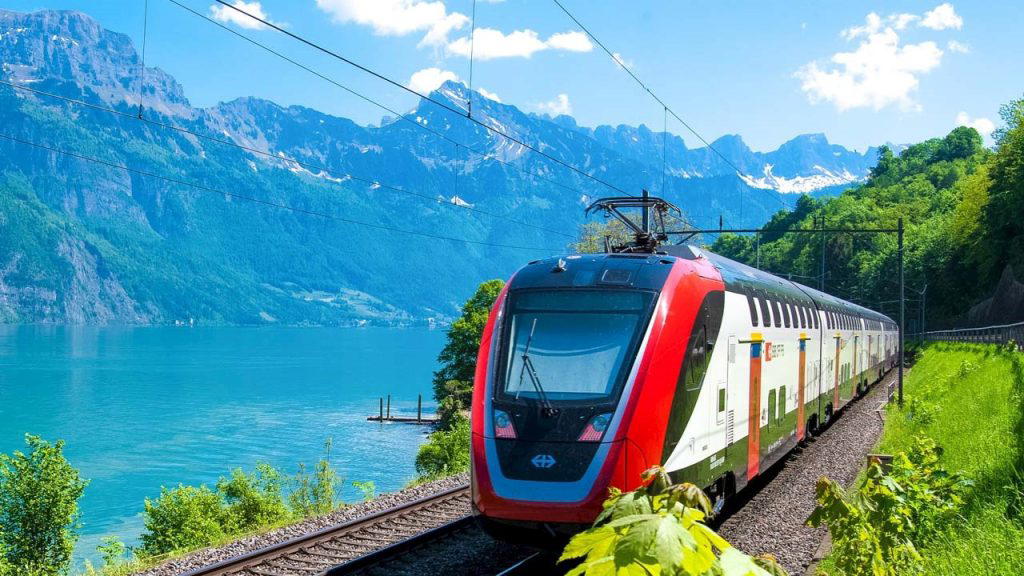

Rail transport is the backbone of Europe’s mobility system, offering an efficient, safe and environmentally friendly alternative to road and air travel.
Over the years, many European countries have made significant investments in railway infrastructure, rolling stock and digital systems to improve speed, comfort and reliability. High-speed trains, well-maintained tracks, integrated ticketing and strong international connections have positioned Europe as a global leader in rail transportation.
Below are 10 European countries recognised for the outstanding quality of their railway systems, with more detailed explanations of their strengths.
1. Switzerland
Switzerland is widely regarded as having the best railway system in Europe and the world. Its trains are exceptionally punctual, clean and reliable, with services reaching even small towns and mountainous regions. The rail system is fully integrated with buses, trams and ferries, allowing smooth door-to-door travel. Switzerland also leads in passenger information systems and timetable coordination.
2. Germany
Germany has one of the largest railway networks in Europe, operated mainly by Deutsche Bahn. The country is known for its high-speed ICE trains, extensive regional services and strong cross-border connections. German railways support both passenger and freight transport efficiently, playing a key role in Europe’s logistics and mobility.
3. France
France is a pioneer of high-speed rail in Europe, with its famous TGV trains reaching speeds of up to 320 km/h. The railway system connects major cities quickly and comfortably, reducing the need for domestic flights. France also has modern stations and advanced rail technology, making long-distance travel fast and convenient.
4. Austria
Austria’s railway system is known for high punctuality, passenger comfort and modern infrastructure. Operated by ÖBB, it offers excellent domestic and international connections. Austria is especially strong in night trains, providing affordable and eco-friendly overnight travel across Europe.
5. Netherlands
The Netherlands has a very dense and well-organised rail network, ideal for daily commuting. Trains run frequently and delays are minimal. The system is highly integrated with bicycles, buses and trams, making it one of the most commuter-friendly railway systems in Europe.
6. Spain
Spain operates one of the longest high-speed rail networks in Europe, known as AVE. These trains connect major cities at high speeds while maintaining comfort and affordability. Spain’s investment in modern stations and rail infrastructure has greatly improved national connectivity.
7. Italy
Italy’s rail system has improved significantly over the past decade. High-speed trains such as Frecciarossa and Italo connect major cities like Rome, Milan and Naples. The competition between operators has increased efficiency, reduced travel time and improved service quality.
8. Sweden
Sweden’s railway system emphasises sustainability, safety and passenger comfort. Trains are clean, technologically advanced and environmentally friendly. The rail network efficiently connects cities over long distances, making it an important part of national transportation.
9. United Kingdom
The United Kingdom has one of the oldest and most extensive railway networks in the world. It supports large volumes of daily commuters and long-distance travellers. While fares can be expensive, the system remains vital for economic activity and regional connectivity.
10. Belgium
Belgium has a compact but highly efficient railway network, ideal for both domestic and international travel. It serves as a major European rail hub, with strong connections to France, Germany, and the Netherlands. High-speed trains like Thalys and Eurostar enhance cross-border travel.
Vanguard News
The post Top 10 European countries with best quality of railway systems appeared first on Vanguard News.