
-
The US announced visa bans on five Europeans over tech rules it says censor American speech.
-
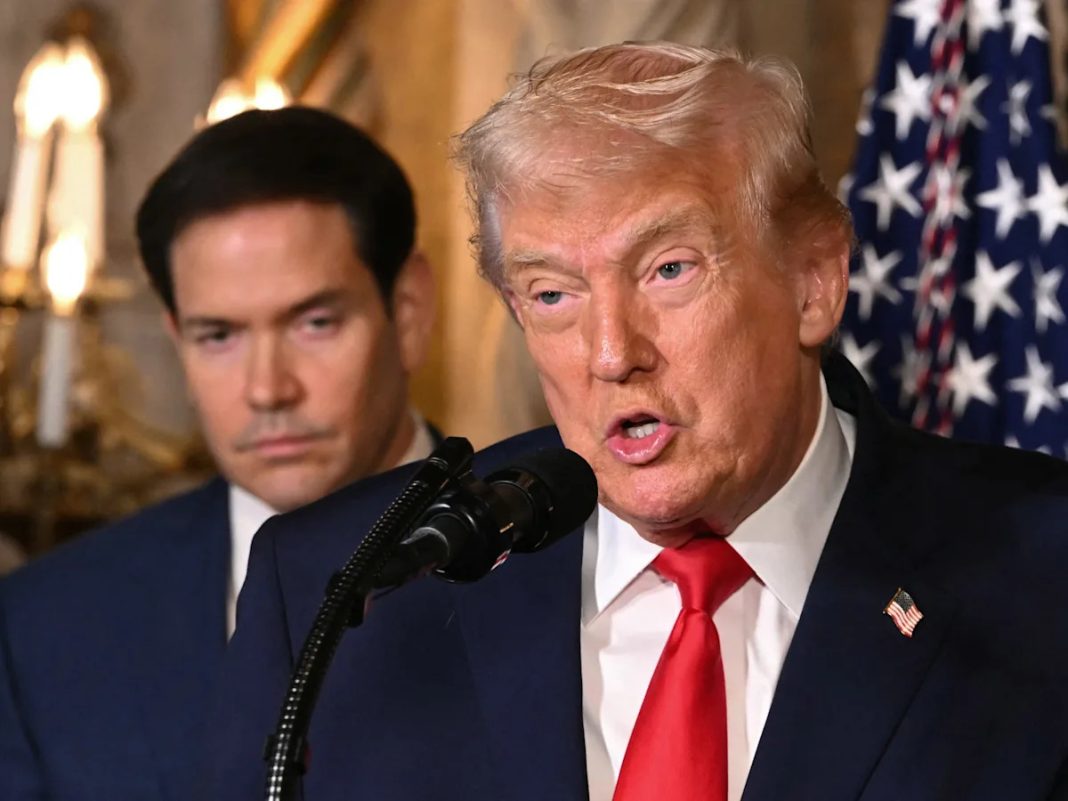
Marco Rubio accused Europe of coercing US platforms to silence views it opposes online.
-
France’s Emmanuel Macron condemned the move and vowed to defend Europe’s digital sovereignty.
The US just escalated its clash with Europe over tech regulation.
The State Department said it has barred five Europeans, including the EU’s former Internal Market Commissioner Thierry Breton and four members of digital campaign groups, from entering the country over what it called “censorship” of tech platforms.
The visa bans were met with backlash from European leaders on X, who accused Washington of intimidation and political overreach.
The dispute centers on the EU’s Digital Services Act and Digital Markets Act, which imposes obligations on major tech platforms — many of which are based in the US — to police content and curb anti-competitive behavior. Companies in breach of it can be fined up to 6% of their global annual revenue.
In a post on X late Tuesday, Secretary of State Marco Rubio said the State Department would block leading figures of what he called “the global censorship-industrial complex” from entering the US.
“For far too long, ideologues in Europe have led organized efforts to coerce American platforms to punish American viewpoints they oppose,” Rubio wrote. “The Trump Administration will no longer tolerate these egregious acts of extraterritorial censorship.”
In follow-up posts on Tuesday, Sarah B. Rogers, the undersecretary of state for public diplomacy, named Breton among the five European individuals sanctioned, accusing him of using the EU’s Digital Services Act to pressure Elon Musk and X during his tenure as commissioner for the internal market.
She also named Imran Ahmed of the Center for Countering Digital Hate, Clare Melford of the Global Disinformation Index, and HateAid co-CEOs Anna-Lena von Hodenberg and Josephine Ballon, accusing them of pressuring US platforms over online speech. None of the four campaigners immediately responded to a Business Insider request for comment.
Rubio added that the US was “ready and willing to expand this list” unless officials reversed course, framing the move as a defense of free expression and US sovereignty.
European backlash
The back-and-forth has largely played out on X, a platform that was hit with a $140 million fine earlier this month for breaching the Digital Services Act.
Breton responded in Tuesday X post by invoking McCarthy-era politics, asking, “Is McCarthy’s witch hunt back?”
He added, “To our American friends: ‘Censorship isn’t where you think it is.'”
French President Emmanuel Macron also condemned the visa restrictions, describing them in a Wednesday X post as coercive measures aimed at undermining Europe’s digital sovereignty.
“The rules governing the European Union’s digital space are not meant to be determined outside Europe,” he said.
The European Commission “strongly” condemned the US decision, adding that the EU has the sovereign right to regulate its digital market and would seek clarification from US authorities.
“Freedom of speech is the foundation of our strong and vibrant European democracy,” European Commission President Ursula von der Leyen wrote on X on Wednesday. “We are proud of it. We will protect it.”
Gérard Araud, France’s former ambassador to the US, said the dispute reflects a deeper rupture, writing on X that “the West” no longer exists and that Europe is now alone in defending its interests and values.
Hodenberg and Ballon told Business Insider in a joint statement that they are “not surprised” by the move, calling it an “act of repression by a government that is increasingly disregarding the rule of law and trying to silence its critics by any means necessary.”
“Despite the significant strain and restrictions placed on us and our families by US government measures, we will continue our work with all our strength — now more than ever,” the duo said.
Daniel Fried, a former US ambassador to Poland and longtime US sanctions official, told Business Insider he could not recall a precedent for Washington imposing visa bans on a former European official in retaliation for policy decisions made in the course of their duties.
Similarly, Jacob Funk Kirkegaard, a senior fellow at the Brussels-based think tank Bruegel, told Business Insider that he could not recall any historical precedent for the move, describing the visa bans as largely symbolic and unlikely to trigger meaningful retaliation.
Musk in the middle
The dispute has been years in the making — and Musk’s X has often been at the center of it.
Musk cheered the US move to sanction the officials, writing on X: “This is so great.”
Breton repeatedly clashed with Musk after he bought Twitter in 2022 and pledged to loosen moderation in the name of free speech.
As the then-internal market commissioner, Breton warned that X could face fines or even be barred from the European Union if it failed to comply with EU law, later overseeing a formal investigation into the platform regarding disinformation and content moderation.
Those confrontations turned X into a symbol of the broader transatlantic fight over who sets the rules for online speech — a conflict that has now spilled from regulation into geopolitics.
Read the original article on Business Insider