
The Scoop
The Tanzanian government is on the hunt for a Washington lobbyist to help “shape its narrative” on Capitol Hill and beyond as the East African nation reels from post-election violence that has spawned its biggest political crisis in decades, according to two people familiar with its plans. Hundreds of people protesting against the electoral process have been killed or detained by security forces since the Oct. 29 elections, the UN reported.
On Dec. 4, the US State Department said it was reviewing its relationship with Tanzania, claiming concerns over “religious freedom, free speech, obstacles to US investment and violence against civilians.”
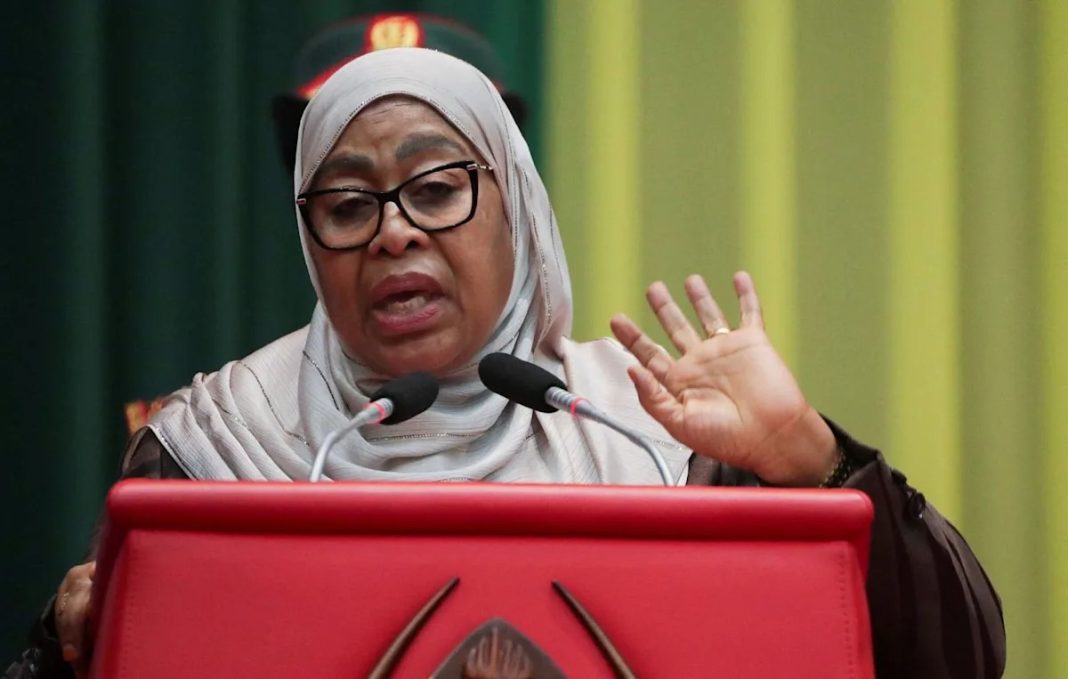
The Tanzanian government’s request for proposals from lobbyists has been circulating around Washington over the last week as the government of President Samia Suluhu Hassan seeks support to bolster its existing relationships on the Hill with a special focus on deploying media expertise as it tries to counter reports of repression and claims of religious oppression, which it has disputed.
Know More
Tanzania’s protests were sparked by the exclusion of leading opposition candidates from the presidential election in which incumbent Hassan was declared the winner with nearly 98% of the vote. The government acknowledged that people were killed but has not released a death toll, and it has rejected allegations that police used excessive force.
Hassan has appointed a commission to investigate election-related violence but has repeatedly denied wrongdoing by security forces, instead accusing protesters of attempting to overthrow the government.
In a separate statement, UN human rights experts said they had received reports that the remains of those killed in the clashes were buried in unidentified mass graves or incinerated after disappearing from mortuaries. “The government must provide information on the fate and whereabouts of all disappeared persons and ensure the identification and dignified return of the remains to their families,” the UN’s experts said.
On Dec. 9, US Sen. Jim Risch, who chairs the Foreign Relations Committee, said the Tanzanian government had “offered no credible explanation for its own election-related crackdown.” Risch also claimed “Christian leaders were singled out for deadly attacks and abductions.”
Last week Tanzanian authorities banned planned protests and canceled Dec. 9 Independence Day celebrations, urging citizens to stay indoors. Reports from key cities said there was heavy security presence and that the streets were quiet.
Yinka’s view
The US State Department’s claims of Christian persecution in Tanzania have likely set alarm bells ringing at State House in Dodoma after seeing the trajectory of a similar allegation in Nigeria, which was added to the “Country of Particular Concern” list soon after.
But Tanzania seems to be better positioned to get ahead of things than the West African country. For one, it has had an engaged US ambassador in place since 2021 and is now trying to call for lobbyist reinforcements to help in areas of weakness. Tanzania hasn’t had a full-time Washington lobbyist for over a decade, according to US filings. But even then, none of this guarantees that Dodoma won’t end up on some sort of naughty list or see potential US investments curtailed.
Another notable factor is how much less talk there is about the state of Tanzania’s democracy in Washington’s critique. That used to be an oft championed metric for African elections as recently as a year ago. The civilian protests in Tanzania were a direct response to concerns about how the government, like several other African countries in recent months, prevented key opposition figures or parties from taking part in the electoral process. While that’s been acknowledged, however, it has not been the primary focus of the Trump administration’s State Department review. Instead it has focused on the symptoms and possible outcomes rather than what might have once been claimed to be the underlying cause.
Room for Disagreement
While recent political tensions have prompted questions about Tanzania, several veteran investors argue the long-term case remains intact for East Africa’s second-largest economy. The country has sustained 5 to 6% GDP growth for over a decade, driven by solid fundamentals, a fast-growing population, and rising domestic demand, pointed out Michael Strain, a managing partner at law firm Bowmans Tanzania in a recent LinkedIn post. “Today’s challenges won’t erase Tanzania’s long-term fundamentals; they simply make the opportunity more visible for those who take a long view,” he wrote.
Notable
-
An in-depth report on how Tanzanian police crushed election protests with lethal force by BBC Verify, a specialist team of journalists using methods such as open-source intelligence, satellite imagery, and data analysis.