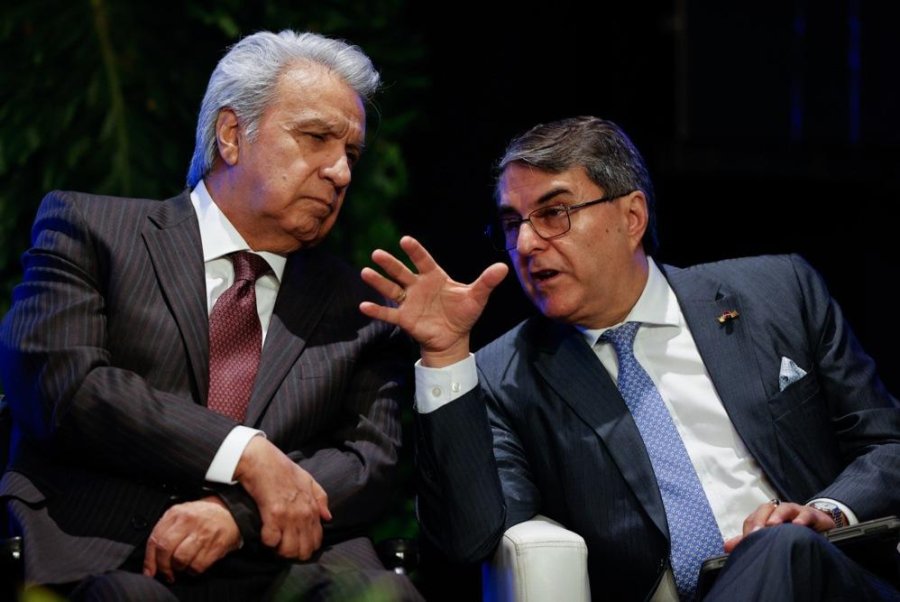

Dec. 9 (UPI) — Former Ecuadorian president Lenín Moreno will stand trial on bribery charges linked to the Coca Codo Sinclair hydroelectric complex, the country’s largest power plant, built by the Chinese state firm Sinohydro.
Prosecutors say nearly $76 million in bribes was allegedly paid between 2009 and 2018, covering the period when Moreno served as vice president under Rafael Correa and later as president.
According to the case file, Moreno and members of his family purportedly received more than $1 million in illicit payments, local outlet Primicias reported.
Coca Codo Sinclair, a flagship project of the Correa administration, cost the state roughly $2 billion and has faced years of scrutiny over structural flaws and corruption allegations.
Moreno joins a list of former heads of state facing criminal proceedings, underscoring the persistence of corruption at the highest levels of Ecuador’s political system since the country’s return to democracy, according to reporting from El Universo.
Abdalá Bucaram was accused in 1997 of irregular contracts involving school supplies and confidential expenditures, though the cases expired in 2017.
Jamil Mahuad was convicted in 2014 of misusing public funds, but pursued appeals, including a final cassation request that was rejected in 2020. Mahuad currently lives in the United States, where he works in academia and consulting.
Gustavo Noboa faced charges tied to the renegotiation of external debt and alleged financial irregularities, but was ultimately cleared and granted amnesty by the Constituent Assembly in 2008.
Rafael Correa was convicted in 2020 of aggravated bribery in a case involving payments exchanged for public contracts. He lives in Belgium, where his lawyers say he holds refugee status.
Moreno, who now lives in Paraguay, has denied all accusations. In a video posted on social media, he said authorities “have not been able to prove that I received a single cent” and called the case a political “vendetta” by Correa’s allies.
He argued that his break with Correa during his presidency prevented Ecuador from sliding into “a permanent dictatorship” similar to Venezuela.
The trial includes 24 additional defendants, including relatives, associates and business figures from Ecuador and abroad.