
By Matilda Ikediobi
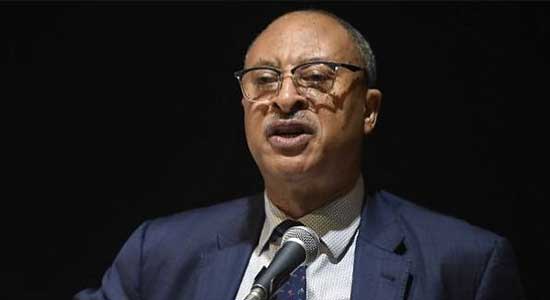
Professor of Political Economy, Pat Utomi, in this monitored interview, gave reasons Nigeria has failed to reach its potential and proffered solutions to the country’s problems. Excerpts:
What’s your assessment of where we are? What’s your view about where we seem to be headed?
I think the Tony Uranta Memorial lecture was an appropriate place to get into this, because in ways, Tony Uranta, who I walked a path with, represented an era of optimism about Nigeria. When we were young kids, youth corps members, back in 1977, the optimism was extraordinary. We thought we would change the world. Nigeria was at the epicenter of a rise of the dignity of the black man. Now, you and I know that this is not how Africans even feel about us anymore. The question is, what went wrong? We can delve into so many tracks of what went wrong and how it went wrong. The problem is that we are not given, unfortunately, in public culture in Nigeria, to rational analysis of how we got to where we are. Nigeria was hooked on the black man for a variety of reasons. I will take a personal example of how I became very friendly with the late General Joseph Garba (ex-foreign minister). Garba was foreign minister when I was a student leader at the University of Nigeria. Back in 1975, as students, I came to Lagos to invite him to engage us in the debate at the University of Nigeria on Nigerian foreign policy. Because at the time, the most important thing in Nigeria was foreign policy. We were called a frontline state and all that. When I got to Lagos, we were told that if we wanted to see foreign minister, we should go and write to our dean. Of course, I went down, waited in ambush, literally, for him to arrive. And as he arrived, I stepped out and said to him, Colonel Garba, I disagree with you on Angola, then I told him my name is Pat Utomi, I am from the University of Nigeria. We began a debate, which took me past his secretary, who had bounced me. Anyway, that is history. That optimism with which we saw Nigeria’s role in Africa has somehow faded.
I can tell you, and I mentioned this in passing at the Tony Uranta lecture, because the chairperson was Ambassador Godknows Igali. When Ambassador Igali was Nigeria’s ambassador to Sweden, I had the good privilege of being invited to see a hosting of Global Trends, a strategic process through which the United States evaluates its place in the world. It was a very small conclave, former European prime minister, the incumbent prime minister of Sweden, foreign minister.
Of course, I can’t talk about what we said at the event, because they are Chatham House rules. But I can say to you that one of the things that hit me at that conference, and I told Ambassador Igali, because he hosted my wife and I for dinner, what has happened to Nigeria is that it has lost its strategic relevance in the world. He said, 30 years ago, no power, no matter how big in the world, would want to do something in Africa without pausing to ask, how would Nigeria react? It is not necessarily that what Nigeria will do will stop it, but it will at least pause and ask.
Today, they would come into Nigeria’s backyard without even thinking of Nigeria. So this loss of strategic relevance in the world is a very painful thing. But we can track how we got here, and that is what gets to me a great deal in having a political class that is not thoughtful enough, that is not able to have the kind of conversation that I had with a young Colonel called Joseph Garba in 1975. Growing up, we read Time Magazine, Newsweek, cover to cover. So when I said what I said about Angola and the foreign minister said to me, what do you mean? I gave him a detailed analysis that got to him, which made him say he was going to Nsukka to go and debate these boys. Unfortunately today, such a thing is no more. So much has changed, and the quality of the political class is significantly responsible for this problem.
You have highlighted the fact that the political class is responsible for this problem, and if we must move forward, we must have a new way of thinking to take us out of this phase. Can you expound on the new thinking?
When I was in grad school, my neighbour was a Liberian who, one day, packed his things and said he was going home. He hadn’t finished his PhD. I said to him, my friend, what is the problem? He said, look, they keep calling him from Liberia, saying things are booming. What are you doing with a PhD? Come back. So he packed his things and left. I returned after my PhD, and lo and behold, very soon, Liberia was unravelling. Who became Liberia’s ambassador to Nigeria? It’s my colleague, Paul, who became Ambassador to Nigeria. Sai, as we called him, lived in the Liberian embassy on Idejo Street there in Victoria Island. He would come to my house. I lived on VI, Aboyade Cole. And he would sit down and say, ‘Pat, you know what worries me? Is that when I was leaving Bloomington, you said to me, where are you going? I said, look, I’m going to Liberia, and I arrived in Liberia and things were booming. I got my Mercedes, so when I saw that things were going wrong, I did not speak up because if I spoke up, I would lose my Mercedes. So I kept quiet. And politicians were misbehaving. Suddenly, the army comes. And I watch things. And I see things going on. And I said, maybe I should speak up. But I feared that if I had spoken up, I would lose my house. I would lose my Mercedes. So I kept quiet. One day, things just unraveled so fast that you were driving your Mercedes. Somebody meets you on the street and says, give me the key of that Mercedes. You come out and give him the key and say, thank God. It’s just a Mercedes. Thank God I’m alive. I still have a house. Then you get to your house. And in the evening, somebody comes and goes, knock knock. Commandante wants to use this house. He says, before you know it, you are in a refugee camp. Your hands are chopped off. He says, Pat, you Nigerians are pouring Nigerian blood like water down the gutters of Liberia to save us. And really, truly, we are grateful. Pat, you Nigerians are spending Nigerian money like it is going out of fashion to save us. And we are truly, truly grateful. But Pat, what is wrong with you guys? You are just trying to repeat exactly what brought us to where we are.’
Now, coming to the problems of Nigeria, we took no lessons away from the heroics of the things that we did to save other Africans. If we were wise people, we would have a thoughtful guardian class that would tell us when we begin to go away from what makes sense. Look, this is what happened to Liberia.
That’s how they got there. This is how Sierra Leone got to where they are. This is why Somalia got to the point that they got to. But we have blocked our ears to thinking people. We have allowed the political class, influenced by the … states, which the only thing that matters is to get money and SUV. What I see, politicians don’t know how I look at them. When I see the big motorcade, I look at them and say, this is an idiot. The hungry country who can’t spend the resources of our country to do what we need to do to fix it, but our egos are driving us down. I took to more indepth reflection, and people who have studied these things and I ask, how do societies fail through human history? Why did they get to behave in a particular manner? A number of, and I don’t have the time to go into all of it, but a number of things I would suggest people to do is reflecting on Carlo Cipolla’s work on stupidity. Look at the work that has been done on idiots, tribesmen and citizens. What we need to do now is begin to raise citizens. People who, of good conscience, can call their country back and say, look, this way we are going will lead to destruction. It will lead to our anarchy.
If you read Lee Kuan Yew’s book on Third World to First World, he said something in Chapter 18. He said, in 1975, I visited Nigeria, met many of the civil servants. They were bright. But the trouble was that they were not able to translate the ideas into action. They were too busy fighting one another for power and the spoils of office.
The result was that Nigeria, with all its oil and wealth and talented people, remained underdeveloped. He further said in that chapter, I have said publicly that in Nigeria government ministers drive Mercedes, but the roads are bad. In Singapore, ministers take the bus or drive modest cars, but the roads are good.
The difference between a society where leaders think of their country first and themselves second. How can we turn this paradigm around?
I spent my lifetime talking about the South-East Asian miracle. I go there every year. In all those years, I kept giving Singapore examples, but Nigerians sometimes think it’s exotic, so I stopped using Singapore examples to an extent, and I turned to closer examples.
Cairo, in Egypt here. I went to an Afrexim meeting two or three years ago, and I stayed in the same hotel with a group of Nigerian bank MDs, and they had ordered a limo. I think a Toyota Corolla showed up. That was a limo in Egypt for them, and they were so upset. I recall their conversation, and it just struck me about the Nigerian problem. I went to mass this morning, and as I was coming, I saw a number of cars and I thought the same thing you are thinking. Look, the top officials in Egypt will show up in Toyota Corolla and all of that. In Nigeria, the most expensive cars are driven by civil servants, public officials, yet the people can’t eat.
I wondered where that logic came from, but somehow the country of the big man arose during military rule. Although, again, to be very fair, former Head of State, General Olusegun Obasanjo (retd), showed a remarkable example. When oil prices took a dip on his first watch, he went down to a Peugeot 504, which was the head of state’s official car.
Everybody else went below that. I look at what is going on now, and I think if soldiers can be smart enough to realise this, how come elected politicians are doing what they are doing with public resources? And I knew we were in very serious trouble. How do we redeem ourselves? A number of thoughts. I mentioned Carlo Cipolla. One of the points that Cipolla makes is that we underestimate how much stupid people dominated the world. He is an economic historian, so he went through economic history of the world, how often the stupid lead to purposeful decision making. And there are so many stupid people who don’t realise it. If you are not a questioning mind, if you don’t think and question every time, the danger of falling into stupidity is very important.
Is there hope for us? Where can we find that hope?
The amazing thing for me is that my experience is that Nigerians are the easiest people to lead.
Look, let me give you a traffic analogy. I was trying to write a book a couple of years ago to use Lagos traffic as the model for this book. In terms of choice, one of the things I found was that the average driver in Lagos, as crazy as he seems to be, usually starts out wanting to do the right thing. One big man goes through, and everybody goes, and the madness is ballooned. But ordinarily, when you show good examples, Nigerians are so quick to adjust.
That’s why I say the problem is leadership. All we need are a few leaders who do the right thing, show examples, and you would be surprised what will happen in this country. What we need to do is bring together people who realise that we are in grave danger from what we have done to our country. Let everybody accept that all have sinned, and fallen short of the glory of God. Let us begin by saying, we will not do this.
The post How new thinking can rescue Nigeria from decline — Pat Utomi appeared first on Vanguard News.