
By Progress Godfrey
ABUJA — Nigeria recorded a fiscal deficit of ₦2.66 trillion in the second quarter of 2025, keeping it within the ECOWAS convergence limit of three percent of GDP, the Budget Office of the Federation (BOF) has revealed.
According to the BOF 2025 Second Quarter Budget Implementation Report (BIR), revenue collection fell short of budget projections but showed improvement compared to the same period in 2024.
The report noted that gross oil revenue stood at ₦4.77 trillion, below the ₦12.76 trillion quarterly target, while non-oil revenue reached ₦4.46 trillion, slightly above estimates.
It highlighted that total net distributable revenue for the three tiers of government after deductions was ₦9.85 trillion, reflecting a shortfall of ₦7.01 trillion.
The BIR said government spending in Q2 totalled ₦8.63 trillion, down 37.19 percent from the quarterly budget but slightly above Q2 2024 levels.
“The revenue and expenditure outturn of the Federal Government resulted in a fiscal deficit of ₦2.66 trillion in the second quarter of 2025. This was ₦865.14 billion (24.52 percent) below the projected quarterly fiscal deficit of ₦3.53 trillion. This translates to a deficit to GDP ratio of 2.64 percent in the quarter under review which is within the 3 percent threshold for the country and the ECOWAS convergence criteria. The Q2 2025 fiscal deficit was also lower than the ₦3.17 trillion deficit recorded in the second quarter of 2024,” the document stated.
The deficit, according to the BIR, was financed through domestic borrowing of ₦2.80 trillion, privatisation proceeds of ₦7.76 billion, and multi-lateral/bi-lateral project-tied loans of ₦1.60 trillion.
The budget report showed that debt service rose to ₦4.44 trillion, with external debt payments at ₦1.69 trillion, 60.05 percent above projections, while domestic debt servicing was ₦90.71 billion below target.
It further emphasised that Gross Domestic Product grew by 4.23 percent in Q2 2025, signalling gradual economic stability supported by government stimulus packages.
The report highlighted that crude oil remained Nigeria’s major export, accounting for ₦11.96 trillion or 52.60 per cent of total exports. Average daily oil production was 1.68 million barrels, though challenges such as theft, vandalism, and underinvestment persist.
“External debt service was ₦1.69 trillion in the quarter, ₦1.01 trillion or 60.05 percent above the prorate projected figure for the period. Domestic debt servicing was however ₦90.71 billion or 5.05 percent below the projection for the quarter,” it added.
The report also said efforts to control recurrent expenditure included an embargo on unapproved recruitment and careful budget oversight.
Furthermore, it said Non-debt recurrent expenditure totalled ₦2.72 trillion while statutory transfers reached ₦499.71 billion.
The report emphasised the importance of improved fiscal management, revenue mobilisation, and accountability in government operations to sustain growth.
Other priorities include enhancing power supply, securing lives and properties, and protecting vulnerable citizens and businesses.
“Overall, the nation’s economy grew by 4.23 percent in the second quarter of 2025, a sign that represents an improvement in economic performance and a gradual economic stability. It is expected that the economy will continue to improve in subsequent quarters of 2025,” the BOF said.
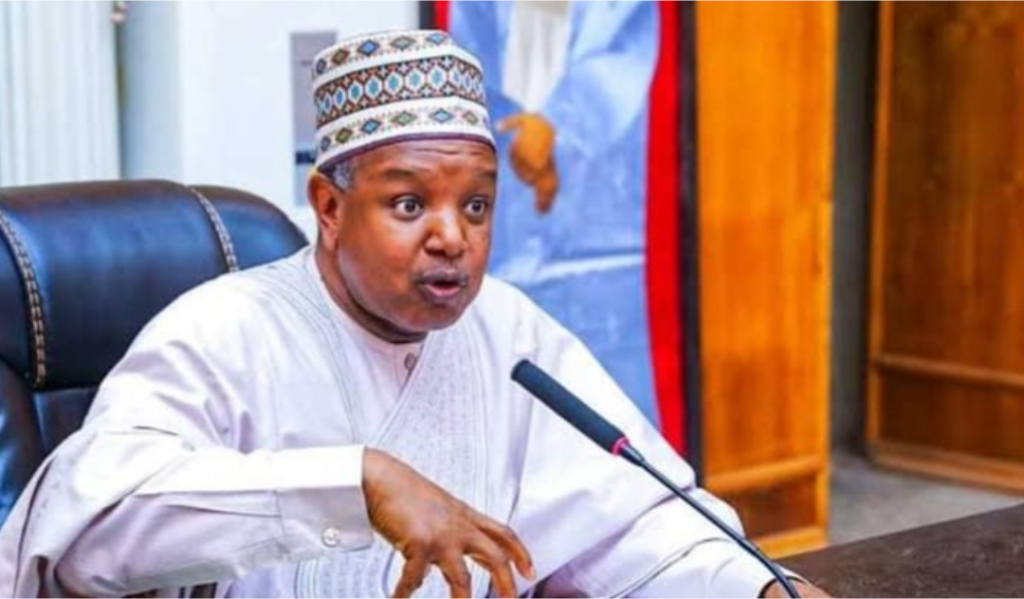
According to the Minister of Budget and Economic Planning, Senator Abubakar Atiku Bagudu, the report reflects the Federal Government’s continued commitment to transparency, accountability, and sound public financial management.
He added that despite fiscal pressures, government prioritised capital investment, highlighting the ongoing imperative to strengthen domestic revenue mobilisation and ensure fiscal sustainability.
Also, Director General of the Budget Office of the Federation, Tanimu Yakubu highlight an outlook which focuses on global conditions, stressing that commodity price volatility, climate shocks, and monetary tightening in advanced economies will continue to test fiscal resilience.
He however assured that the budget office would sustain its role in rigorous monitoring, inter-agency data integration, and transparent public reporting.
The post FG records ₦2.66trn fiscal deficit in Q2 2025, below ECOWAS threshold appeared first on Vanguard News.