
The News
Donald Trump’s Republican Party is often tugged in opposite directions by two competing economic influences: its corporate-friendly establishment and its upstart populist wing.
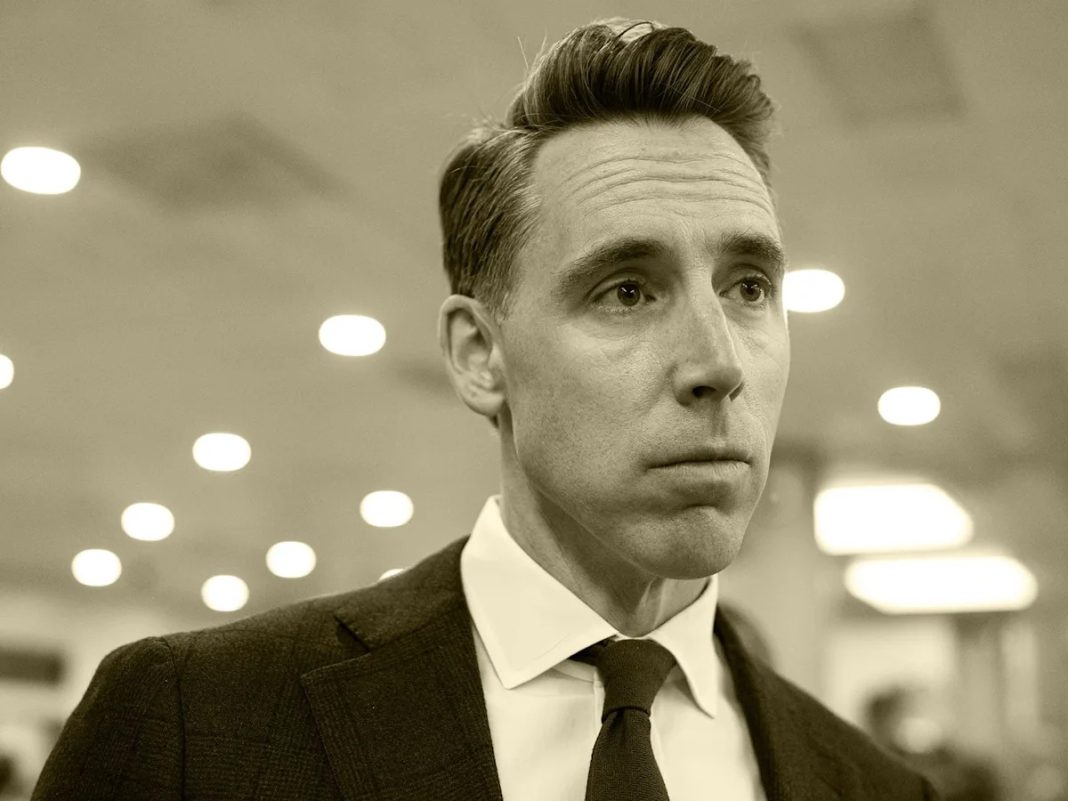
Sen. Josh Hawley, perhaps the chamber’s truest populist, is starting to worry that his camp is being ignored — and, as a result, that the party will lose Trump’s advantage with working-class voters next year.
“I think it is at risk. I think there’s no doubt about that. The president knows it’s at risk,” the Missouri Republican told Semafor. “Voters aren’t stupid. They’re not in this because they’re loyal to some party or another. They’re in it to try to improve the conditions of their lives.”
Hawley is no Marjorie Taylor Greene; he’s not about to flee the legislative arena and just won another six-year term. But he and the Georgia congresswoman are both warning of a rude awakening in next year’s midterms if Republicans don’t course-correct.
He said fellow lawmakers are spurning Trump-backed ideas, like legislation to lower drug prices or send out tariff rebate checks, at their own peril: “If they do, then they’ll lose … If we want to be a majority party, our future is to be a working-class party.”
Hawley’s counsel comes as the battle to control the post-Trump GOP heats up, less than a year into a second term that started with clear signs the party was ready to follow the president’s rejection of its Bush-era economic agenda.
Tax cuts on tipped wages and overtime as well as tariffs gained favor among many Republicans — all ideas that were anathema to the old guard.
Over the summer, Republicans made good on several of Trump’s more populist campaign promises as part of their party-line tax law. It was a major boost for Hawley, an economist populist and social conservative who can count Vice President JD Vance as a policy ally.
But in other areas, the party strayed far from a pro-working-class posture.
Republicans cut future Medicaid benefits in their tax law; it was a tough pill for Hawley to swallow, but he ultimately supported the bill in part because it provided relief to his constituents exposed to radiation. On top of that, Trump and many other Republicans are reluctant to extend Affordable Care Act subsidies that keep health care premiums down for millions.
And Republicans are resisting Trump’s hopes to send most Americans $2,000 tariff rebate checks, an idea that Hawley embraced long ago. Wide-ranging prescription drug reform remains elusive, too. Hawley is now trying to convince his colleagues to exempt medical expenses from taxes.
Could the Republican Party be reverting back to its old ways?
“The institutionalist Republican Party is not a populist party. I think that’s pretty clear,” Hawley said. “The bottleneck’s in Congress. You’ve got Trump out there saying we ought to do dividend checks. You’ve got Trump out there saying we need to do a deal that will lower prescription drugs for everybody. You don’t see Congress acting.”
Know More
The party’s divide on economic populism reflects a political split over whether it’s done enough for voters ahead of the midterms. Republicans passed a massive tax cut, but the bulk of that bill was dedicated to preventing a tax increase next year.
Working-class benefits did make it into the plan, fulfilling Trump’s campaign promises to lower taxes on overtime, tipped wages and for senior citizens — but Congress did so begrudgingly. New investment accounts for newborns, also a part of the bill, check both the corporate-friendly and populist boxes.
Most importantly, voters haven’t fully embraced the tax law, and Republicans are fretting that they may miss an opportunity to do more. They have total control of the government for another year, which allows them to do more party-line tax and spending bills if they want.
Some in the GOP are pushing for a follow-up to deliver more of Trump’s agenda and get voters to pay closer attention, reflecting the view that a year of nominee confirmations and government spending bills won’t break through to average voters.
“They want us to talk about cost of living, housing, insurance, health care. They want us to address growth,” said Sen. John Kennedy, R-La. “I can promise you, the American people, moms and dads — when they lie down to sleep at night and can’t — they’re not worried about how many nominees we confirm, and they’re not worried about returning to regular order.”
Getting a second party-line bill done in an election year, however, would require agreeing on how to address rising economic angst. Republicans aren’t there yet.
Sen. John Hoeven, R-N.D., said he’d prefer to use tariff revenues to reduce the deficit but is open to the idea of direct payments to consumers. He said Trump and Republicans’ low standing on the economy would naturally improve once voters feel the effects of the tax cuts bill, a common Republican view.
“It takes some time for the new policies to really kick in and reduce inflation and create more economic growth,” Hoeven said. “The argument is affordability. And I get that. Because you need to make sure people are feeling the benefits of a better economy.”
People like Hawley counter that time is running too short to wait. Having called for a reversal of the Medicaid cuts and direct payments to consumers during the pandemic, the second-term Missourian said the public responded most in 2024 to Trump’s plans to cut drug prices and his working-class tax cuts.
If Congress doesn’t finish Trump’s agenda, Hawley said he fears the GOP will revert right back to its pre-Trump policies and get thumped at the ballot box. He said anyone who looks at last month’s off-year elections should “be concerned.”
“The public is saying they voted for Donald Trump in 2024. They really liked what he ran on,” Hawley said. “Sooner or later, you know, something’s got to give. I’m worried about it.”
Room for Disagreement
Tariff revenue almost certainly wouldn’t pay for the full $2,000 checks, which means they would probably amount to deficit spending.
After Republicans swallowed a tax cuts law which overall did little to rein in the US debt, it’s little surprise Trump’s plan is facing blowback from fiscal conservatives. It’s hard to be a fiscally conservative party and a populist one at the same time.
Burgess’s view
There were plenty of forces steering the GOP back to its roots after Trump lost in 2020 — such as Mitch McConnell, who sought to restore a hawkish foreign policy and traditional Republican economic agenda. Trump’s 2024 win changed that. But for how long?
Recent electoral data and polling shows that wealthy and educated voters who used to vote for Republicans now vote Democratic, but the working-class potential new GOP stalwarts could just as easily reverse their choice in response to future Medicaid and food aid cuts.
Trump’s party is at a crossroads in terms of its sales pitch for 2026, and even 2028. Hawley is right: The choices they make now will affect them for years to come.
Notable
-
A new dynamic we noticed recently: Trump is no longer getting everything he wants from the GOP.