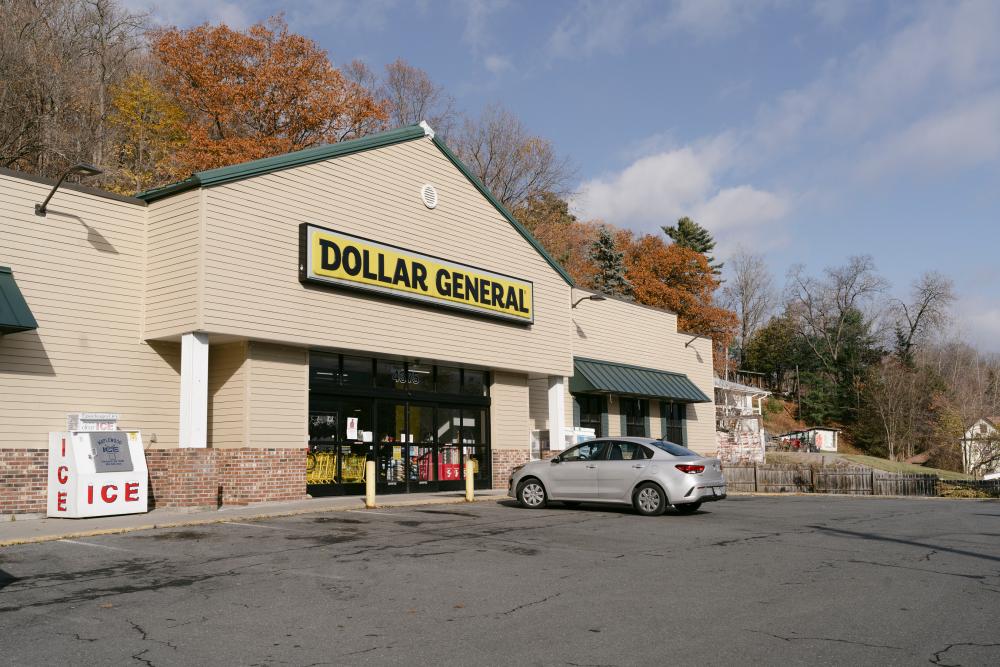

Thirty members of Congress are demanding answers from Dollar General and Family Dollar, requesting internal documents about widespread disparities between shelf prices and register prices at the dollar-store chains’ 28,000 US stores.
The demand for answers – detailed in a letter sent today to the CEOs of both companies – comes as the direct result of a 3 December Guardian investigation of the two behemoth dollar-store chains. The investigation found that Dollar General stores have failed more than 4,300 government price-accuracy inspections in 23 states since January 2022. Family Dollar stores have failed more than 2,100 price inspections in 20 states over the same time span.
“These staggering numbers lead us to wonder how seriously your companies prioritize affordability, consumer transparency and corporate ethics for the constituents we represent,” says the letter, authored by US representative Nikki Budzinski of Illinois and signed by 29 other Democrats.
The demand from the lawmakers comes amid what they describe as an American affordability crisis driven by stagnant household incomes and rising consumer prices, including a surge in grocery costs of “almost 30% over the last five years, with the highest increases occurring in everyday goods like ground coffee, beef and eggs”.
The Guardian’s investigation detailed pricing errors on frozen pizzas, Pedigree puppy food, Frosted Flakes, frying pans, cough medicine, socks and other items. In one example at a Family Dollar in North Carolina, a state inspector found that Bounty paper towels, listed at $10.99 on the shelf, rang up at the register at $15.50.
The letter says the Guardian’s investigation shows that overcharges at dollar stores are “not isolated to a geographic area or to a handful of stores across the country. Instead, the scale of documented violations seems to be the result of systemic failure within your corporate operations, leading to customers overpaying for their groceries, potentially without knowing, at a time in our history when they can least afford it.”
Neither Dollar General nor Family Dollar responded to the Guardian’s questions about the letter.
The congressional letter also takes aim at another practice highlighted in the Guardian’s investigation: both dollar-store companies ban users of their mobile apps from filing class-action lawsuits.
Dollar General’s app and website also require that disputes instead “be resolved exclusively by final and binding arbitration”, although the company also allows for individual claims in small-claims court.
“This refusal to honor shelf prices coupled with forced arbitration agreements takes away virtually any possible course of action for customers who have been wrongly and unfairly overcharged at your stores,” the letter said.
The lawmakers ask the companies to turn over four years’ worth of correspondence about their price labeling practices. They also ask for documents about the revenue generated by price inaccuracies and about mobile app policies.
In addition, the lawmakers ask the Dollar General CEO, Todd Vasos, and the Family Dollar CEO, Duncan MacNaughton, a series of pointed questions, starting with “Why have your stores’ internal auditing systems continuously failed to detect pricing error rates of this magnitude before state inspectors arrive?” They also ask what steps the companies are taking to provide restitution to communities hit by “chronic overcharging”.
Budzinski, who represents parts of central and southern Illinois, said her district has 30 Dollar General and Family Dollar stores. For some of her rural constituents, she said, there are no nearby supermarkets. “They have nowhere else to go for milk, for bread, for toilet paper,” she said. “People are coming in their doors banking on affordable options. But really what’s happening – and what was really exposed, I think, in the story – was that [the companies] are engaging in deceptive pricing and that there’s little recourse right now for the customers.”
Many states inspect businesses for price accuracy, but Illinois does not. “What this could lead us to is looking at something of a federal enforcement mechanism so that all of the states have the same protections,” Budzinski said.
Family Dollar told the Guardian in a statement in November that “we take customer trust seriously and are committed to ensuring pricing accuracy across our stores”. Dollar General said in a previous written response to the Guardian that it was “committed to providing customers with accurate prices on items purchased in our stores, and we are disappointed any time we fail to deliver on this commitment”.
Besides the 30 lawmakers who signed the letter, it was endorsed by the United Food and Commercial Workers International Union (UFCW) and two economic justice organizations, Groundwork Collaborative and Public Citizen.
“Corporations cannot be allowed to screw over consumers without accountability,” said Joshua Miller, director of Public Citizen’s Congress Watch. “With everyone struggling with this Trump-induced affordability crisis, the last thing people need is to be walking into stores that are advertised as being affordable only for them to get the switcheroo.”
Ademola Oyefeso, director of UFCW’s legislative and political action department, said his union was concerned about dollar-store price mismatches because of the implication for workers. The discrepancies stem in part from the industry’s minimal staffing, according to industry watchers, ex-employees and lawsuits cited by the Guardian. Some stores only have one or two employees on duty at certain hours, and they are responsible for stocking shelves, ringing up customers, looking for shoplifters and cleaning the building. This leaves them with little time to put up new shelf tags, even as prices are updated automatically at the register.
Oyefoso said he worries that other companies, like supermarket chains, will follow the dollar stores’ lead and cut the jobs of workers responsible for assuring price accuracy. “When some retailers see a way to save money,” he said, “there’s a monkey-see, monkey-do attitude.”
Jocelyn C Zuckerman contributed to this story.