
By Favour Ulebor, Abuja
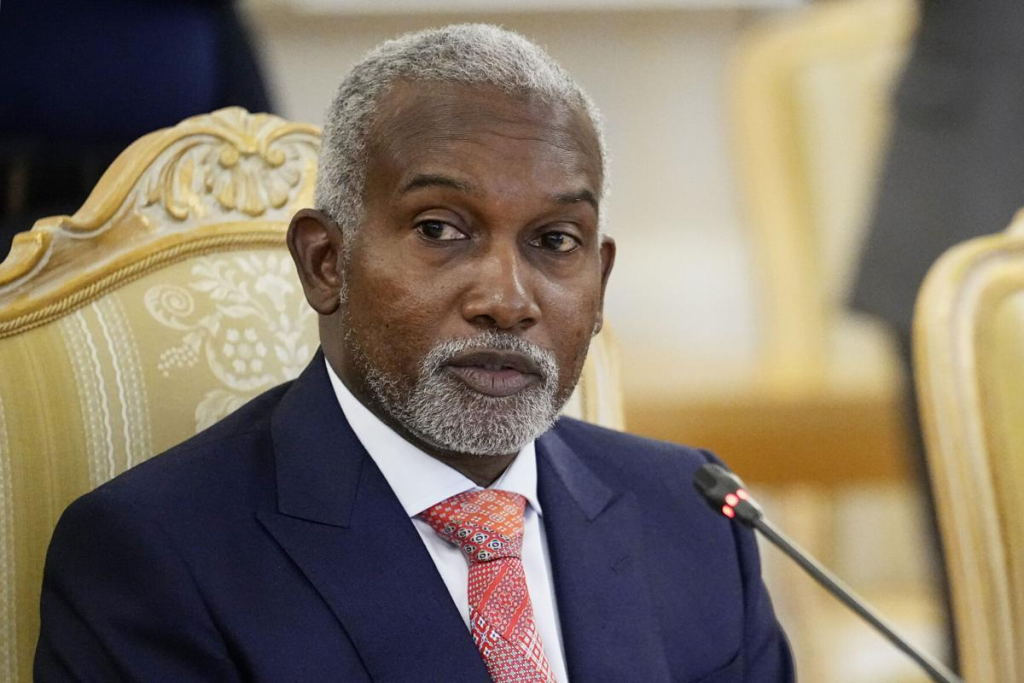
Nigeria’s Minister of Foreign Affairs, Yusuf Maitama Tuggar, has said that the country’s internal security challenges cannot be separated from wider regional crises, warning that instability in neighbouring states directly fuels insecurity at home.
Speaking at an ECOWAS ministerial briefing on Thursday in Abuja, Tuggar said Nigeria must intervene when nearby countries face threats to democratic stability, including the recent attempted coup in the Benin Republic, because the ripple effects inevitably reach Nigeria.
Tuggar explained that insecurity in Nigeria mirrors the wider instability across the Sahel and Lake Chad Basin, driven by conflicts, terrorism, and the flow of fighters and weapons across borders.
He said, “Nigeria’s internal problems are inextricably linked to the external problems. So we would not be doing ourselves any good if Republic of Benin has a problem and we don’t help in tackling it and tackling it decisively.
“The insecurity problem that we’re facing today, like I said, is a regional problem. It is a Sahelian problem. It is a Lake Chad Basin problem and the factors that are affecting us are mostly exogenous.”
He said the collapse of Libya and the fall of Muammar Gaddafi created conditions that now drive terrorism and arms proliferation throughout West Africa.
“The security problem we’re facing today is tied to the dysfunctioning of Libya, the fall of the Gaddafi regime. It is tied also to the conflict in the Sahel and the fight against terrorism in the Sahel region, in Mali, in Burkina Faso, in Niger and beyond,” he said.
Tuggar noted that conflicts in Nigeria are often misinterpreted as religious or ethnic when in reality they are part of a continuous chain of violence spreading across the region.
He added that the situation worsened after the change of government in Niger Republic.
Tuggar stressed that Nigeria cannot afford to ignore instability in Benin Republic, describing Benin as one of Nigeria’s closest and most strategic neighbours.
He said, “When you see conflict happening in Zamfara, in Katsina, in Sokoto, in Kebi, it moves down to Benue for instance and only then is it framed as a religious conflict. It’s not because it’s the same conflict that is happening in Katsina that is happening in Benue and that is happening also in the Sahelian states and the Lake Chad.
“It did not help matters that after the change of government in Niger, Niger opted out of the multinational joint task force that had been so effective in fighting Boko Haram.
“So how much more if we allow, while we’re sitting idly by, a crisis in Republic of Benin, which is our neighbour to the west. We already have issues to the north and to the northeast. So why would we sit by and not participate?”
He emphasised that Nigeria has always taken a leadership role in regional stability.
Speaking further, Tuggar warned that delayed responses to regional crises can lead to dangerous outcomes.
He said, “Nigeria has always been ready, willing and able to help. When the timing is right, when everybody plays the role that they’re supposed to play; then we’re able to avert these sorts of occurrences.
“When we have situations where people are crossing the lanes, then we lose time and the reaction time becomes late. And then you’re presented with a fait accompli.”
He also addressed concerns about countries under military rule in the region, noting that President Bola Ahmed Tinubu’s administration created the Regional Partnership for Democracy to strengthen democratic transitions.
He added that democracy in Africa must reflect local realities rather than imported models.
According to him, “What President Bola Ahmed Tinubu’s administration has done is to come up with the regional partnership for democracy; a way of strengthening democracy in the region and assisting countries going through a transition to civil rule to achieve that return to democratic rule.
“It’s not a one-size-fits-all, As Africa we can come up with what works for us internally.”
Tuggar also warned that misinformation poses a major threat to democratic stability.
The minister urged citizens, especially youth, not to romanticise military rule.
He said Nigeria is working with UNDP and ECOWAS to strengthen democratic governance across the region.
He said, “Democracy operates under the consensus that we agree on what truth is. The moment we say truth itself is something that should be determined by whatever we want then democracy begins to face a very serious challenge.
“People like me grew up under military rule… We know it is not what it’s made out to be and ultimately the military is not trained to deal with issues to do with development, primary health care, infant mortality.”
Benin Republic’s Minister of Foreign Affairs, Olusegun Adjadi Bakari, who also spoke at the briefing, praised the collaboration between both countries during the attempted coup.
Bakari noted that regional solidarity played a decisive role in preventing the coup from succeeding.
He said, “The second thing is our regional institution and the partnership, the brotherhood between Benin and Nigeria under ECOWAS protocol is really well functioning because we show that together we can fight for democracy. We can stop people trying to derail our democracy in the region.”
The post Benin coup: Nigeria’s internal problems tied to external crises — Minister appeared first on Vanguard News.