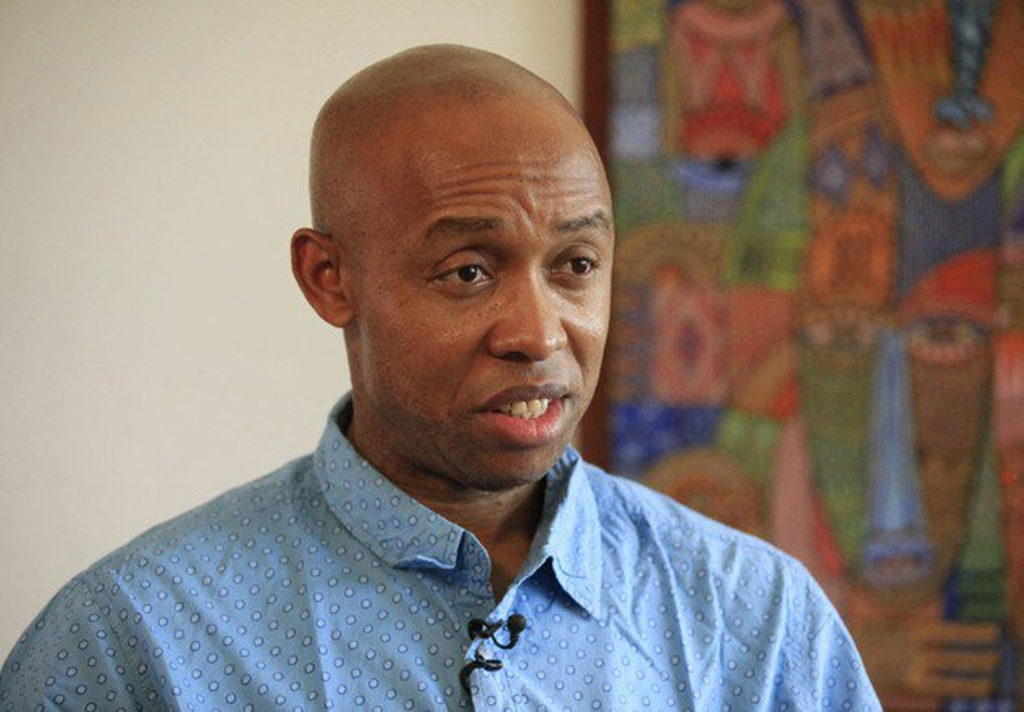

By Chidi Odinkalu
This conference meets in a difficult moment for a country with a troubling balance sheet. On the credit side, civilian government under the guise of electoral legitimacy is now in its 26th year, the longest unbroken stretch in Nigeria’s history. It is a stretch long enough to inspire genuine questions from the people about the rewards it has offered to any demographic on a national scale in the country other than the politicians. Alive to the fact of their monopoly of the rewards of civil rule, the politicians have in turn rendered the cost of entry into political competition too prohibitive for people with legitimate means seeking lawful ends.
This is why it is also useful to reckon with the mounting toll of human tragedy that populates the debit side. In the first six months, according to advocacy and monitoring coalition, Nigeria Mourns, violent atrocities and “threat neutralization” incidents accounted for 4,410 people killed and another 1,011 abducted across the country. These numbers indicate a country at war or in a very active state of what international humanitarian law would call a non-international armed conflict, NIAC. Of this number, at least 189 (4.29%) were security personnel, including 150 from the military and 32 from the Nigeria Police Force, NPF.
In the last month alone, terrorists have killed a General of the Nigerian Army together with at least four men under his command in Wajiroko Village, along the Damboa-Biu Road in Borno State, North-East Nigeria. At least another three men of the Nigerian Army were killed in Dikwa when they came under attack from terrorists on or around 22 October. They have also:
• killed a high school Vice-Principal in Kebbi State for the high crime of being devoted to her students;
• abducted at least 339 from schools (in Kebbi and Niger States), most of them female learners and their teachers; and
• forced the closure of schools in at least five states representing 222,741 Km² of the country (24.11% or nearly a quarter of Nigeria’s total landmass of 923,768 Km²). This number represents 14.5% of the total of 2,338 persons abducted from schools in Nigeria in the past decade.
• This tally excludes 47 unity schools, representing 45% of the total of 104, which have also been closed by the Federal Government because of fears of inability to guarantee the safety of the learners.
The casualty count in this toll of human victimization includes our friends, brothers, sisters, neighbours, fellow citizens and members of our human race. We may not have the power to bring the flag down to half-mast in memory of all the injured and the killed.
This violence has become both crippling and chronic, suggesting levels of governmental incapacity redolent of Weimar Germany. The opening of this conference occurs on 2 December, observed annually as the International Day for the Abolition of Slavery. Many here probably believe that slavery was abolished in the 19th century and that it has no particular relevance to us at this location in the 21st century, but these numbers and the attendant depth of victimization characterized as they are by patterns of pre-Neanderthal atrocities, unquestionably represent an attack on enlightenment in Nigeria and an effort to enslave the country into the suffocating embrace of nihilist zealotry.
Fifty-three years ago, almost to the day, on 3 December 1972, senior lawyer, Alhaji Rauph Gaji, in his home in Kaduna, violently assaulted his secretary, Cordelia Ego Ejiofor, so badly that she died of her injuries in his car as he reluctantly tried to take her to the hospital in the company of the star witness, Mrs. Gladys Ibidun Wey. Thereafter, he casually disposed of her body along Kachia road in Kaduna. The corpus delicti was never really found but Alhaji Rauph was convicted of manslaughter and eventually sentenced to 12 years. The Supreme Court decision in this case on 23 May, 1975 is famous in the law of evidence. But this is a case that should be taught even more in civics, which sadly has been abolished in Nigerian schools. In this case, all the major cleavages of Nigeria came together. The accused was Muslim. The venue was in the North. The victim was a single Christian woman from the South-East. The star witness was a woman from the South-West. The prosecutor was Alhaji Mamman Nasir. Think about it: what are the chances of a similar case being prosecuted at all in today’s Nigeria.
A Practice Section for a “Dysfunctional State”
In the last quarter of 2007, as Olisa Agbakoba, SAN entered the last year of his tenure as the 23rd President of the NBA, the organization was structured into two practice sections: a Section on Business Law, SBL; and a Section on Legal Practice, SLP. Both practice sections were designed to be inward-looking, addressing the needs of lawyers as professionals and entrepreneurs. Olisa was Nigeria’s leading human rights and civil liberties lawyer. With a background in public interest law, he took an interest in the idea of a practice section to address the duties of the legal profession towards the country. Following discussions with him about a legacy, he invited a memorandum to embody this concept. I did that memorandum. The two practice sections at the time were already well established. We needed a brand that was recognizable, even sexy. The memo proposed the establishment of a SPIDEL at the Nigerian Bar. With Olisa approval as the president of the NBA, the practice section was born at the beginning of 2008 with Joe-Kyari Gadzama as the first chair of its Council. Victor Nwakasi was the first Secretary. I served as its first Co-ordinator. The goal was very simple: while the SBL and the SLP looked after the interests of the Bar, the SPIDEL was to make a cause of the country and its well-being.
At the time of the creation of SPIDEL 17 years ago, the country felt different. It had come through the 2007 elections which, by common consent, were a nadir for the country, and was in the midst of deep soul-searching about how to safeguard elective government for present and future generations. The previous year, in 2006, Peter Lewis had described Nigeria as a “dysfunctional state”, and warned: “ruling elites and public institutions have not provided essential collective goods, such as physical infrastructure, the rule of law, or legitimate symbols of state authority and political community.”
The Case in A Nutshell
In the period since Peter Lewis offered his thesis of a dysfunctional Nigeria, it would appear as if the country and its leadership has worked deliberately hard to prove him right. In the fields of endeavour that underpin human progress – governance and election administration; cost of living and the economy; safety, security, and coexistence; institutions and the justice sector; civics and ethics in government – the sense is palpable that the country is not doing well. It is not as if evidence of causation or culpability are not there. But there is a crippling sense of tolerance for the wrong way of doing things; an absence of consequences for egregiousness; and a normalization of the death of indignation.
When Mr. Christopher Sapara-Williams enrolled in 1888 as Nigeria’s first lawyer, the territory presently known as Nigeria was under the control of the Royal Niger Company, RNC, operating under a Royal Charter granted in the year immediately following the end of the Berlin West Africa Conference (1886).
That was 26 years before the Amalgamation of 1 January 1914. Mr. Sapara-Williams died in 1915, the year after the Amalgamation. Much has changed since then, and yet a lot has remained the same. One such constant is the fact that the economy now – just as it was then – remains dominated by extraction. The logic of an extractive economy is its dependence on rents.6 The legal profession has a reputation for leeching on these and for enabling the triple evils of multidimensional predations, weak institutions, and poor governance.
I propose, therefore, in the remarks that follow to suggest that Nigeria suffers a triple crises of state fragility and legitimacy; institutional incapacity; and multi-dimensional impunity roughly symmetrical with the triple challenges of development, justice, and accountability which frame the sub-themes of this conference. In the face of these challenges, it is arguably too late or too presumptuous to worry, as the theme of this conference appears to, about whether or not our national banner is stained. Any country afflicted with these problems will have more than its fair supply of people entirely and solely invested in staining its banner. It may be more profitable to focus on questions antecedent to and ultimately constitutive of the banner. Those questions are political in nature, very much like Kelsen’s de-materialized grundnorm. 8 Neither the NBA nor SPIDEL will ultimately resolve them but the NBA and SPIDEL can become agents in establishing proof of concept, modelling interventions that demonstrate what is possible, and persuading the country and its leadership to course correct. Absent such course correction, I suggest, the country on its present trajectory is not sustainable. This modelling can be calibrated over short, medium and long hauls. Some areas in which SPIDEL can lead in this include:
(a) Accountability for mass atrocities;
(b)Election administration and related dispute resolution;
(c)Judicial accountability and performance;
(d)Legal, civic education, and pedagogy; and
(e) Regulatory Reform for the AfCFTA.
Returning to Peter Lewis and his state dysfunctionality thesis for a moment, it is as if the crisis of state and governmental legitimacy that he foresaw for Nigeria two decades now seems almost prophetic. Among many of the symptoms, to adapt Paul Collier, political competition has become “more attractive to criminals than to the honest”, affording them immunity from accountability and impunity for abuse of the prerogatives that belong to the Nigerian state.9 If an unravelling were to eventuate, the consequences would ripple well beyond the continent of Africa. At this existential moment for the Nigerian banner, therefore, the theme of this conference could not be more timely. It is in this context that this conference convenes to ask itself awkward questions, to retool the ambitions of SPIDEL and to renew the mission of the only Practice Section at the Nigerian Bar that exists for country, cause, and consequence. It is useful at this point to turn briefly to the three crises each of which could easily become causes for SPIDEL.
Concerning Banners and Stains: The Cause of Country
Amidst this triple crises of fragility/legitimacy, institutional incapacity, and multi-dimensional impunity, we gather here in this conference to explore the contours and future of justice, accountability and development in the country under the theme “A Banner without Stain”. These four words are taken from the second stanza of Nigeria’s new-old national anthem which reads as follows:
Our flag shall be a symbol
That truth and justice reign,
In peace or battle honour’d,
And this we count as gain,
To hand on to our children
A banner without stain.
This text is pregnant with pre-text, sub-text, and context. It rallies citizens to the flag as a symbolic banner of truth and justice; and with an inter-generational promise of equity from the present generation to their children, tying in one stanza and with consummate economy the themes of justice, development, and accountability which preoccupy this conference. With so much human casualty from the metastasis of violence in the country over the past decade and a half, however, the stains of both suffering and blood are already overwhelming around us.
It is necessary to call attention to the structural fractures at the foundation of these crises and the stains that evidence them. Statehood enjoys three presumptive monopolies. These include a presumption of lawful normative ordering, allocated to the legislature; the twin presumptions of legitimate deployment of the instruments of violence and of fiscal governance (taxation), which are in the executive; and the presumption of legitimate dispute resolution which is associated with the judiciary. These presumptive prerogatives of the state are distributed through the doctrine of separation of powers between three branches of government, which supposedly coexist with one another as co-equals. Alexander Hamilton described these as “the different departments of power.”10 In Nigeria, these three presumptions are contested today by a motley crowd of armed non-state actors everywhere terrorizing citizens, extorting them, and imposing bigoted pre Neanderthal notions of consequences under the craven watch of the state. This situation is now chronic.
Faced with this reality, it is arguably presumptuous to focus on the stain(s) without thinking about the banner or indeed seeing the issues antecedent to the banner. The banner is only meaningful to the extent that is underpinned by a shared sense of collective or shared ownership. Absent that, the banner is guaranteed to suffer stain and may even be condemned to be torn down and shredded. The collective ownership of the sort that can underwrite a national banner sufficiently to preclude it from suffering indelible stain or worse fate lies in forging a project of a common and coherent Nigerian identity, which alone is capable of defending the sanctity of the banner. A country still counting the sectarian identities of those killed by its hydra-headed insurgencies is not yet prepared to contemplate this. The case of Rauph Gaji vs. The State, whose facts are recalled earlier in this text, reminds us that this was not always so.
The idea of country is inherent in and antecedent to lawyering in Nigeria. Under the Legal Practitioners Act, citizenship of Nigeria is a precondition for admission to the Nigerian Bar.19 While standing to practice as a lawyer is a privilege which can be lost under circumstances of professional sanction, Nigerian citizenship is a right which cannot be taken away (except under narrow circumstances imputing serious crime for those who acquire it through fraud in the process of naturalization).12 Inherent in the privilege of being a lawyer, therefore, are implicit civic obligations.
Yet, within the profession, the virus of fragmentation is a dominant strain. Among even very senior lawyers, the din is growing to add the Supreme Court as a trophy in Nigeria’s Olympiad of ethnocentrisms, cannibalizing it into ethnic or geo-political supreme courts in a country in which the shape or colour of justice a person is liable to get will be dependent on their post-code or location. Some of the people leading these calls suffer no pang of irony or cognition in the fact that they go under the appellation of Senior Advocate of Nigeria (SAN), not Senior Advocate of Neanderthals!
Jean Matthews did describe the law as a system of ethics ultimately founded on “civic virtue”,13 and Alexis de Tocqueville famously described the Bar and Bench as the place where the “Aristocracy is found.”14 This aristocracy is defined not by material possessions but by elevated values and enlightened civics. They should inspire us in the direction of arguing that those who operate this system of civic virtue and of an aristocracy of values cannot do so in the name of vice. This inherent duty of the lawyer to advance the wellbeing of the country is essential for the success of the legal profession because if that is endangered, the former has no hope of existing, much less to thrive. Anthony Kronman points out, therefore, that the essential lawyer is: A devoted citizen. He cares about the public good and is prepared to sacrifice his own well-being for it, unlike those who use the law merely to advance their private ends… He is distinguished, too, by his special talent for discovering where the public good lies and for fashioning those arrangements needed to secure it.15 The history and colonial origins of Nigeria’s legal profession would suggest that any such assumption should – at best – be treated with considerable caution. In this view, Abdul Mahmud Aminu, a senior lawyer from the South-South of Nigeria, has recently written:
The Nigerian Bar cannot claim innocence. Our lawyers have long served power, not people. Colonial barristers lent legitimacy to indirect rule, codifying ordinances that dispossessed communities of their land. In today’s postcolonial Nigeria, lawyers draft the contracts that sell off our commonwealth to prebendal elites. They defend election riggers in court with the same zeal they defend oil companies that spill and pollute the Niger Delta.
A Crisis of Fragility and Legitimacy
It is impossible to articulate the cause of Nigeria coherently without understanding how it came about and why the challenge of a coherent national identity is so stubborn. At independence, Ali Mazrui explains in a study published in 1968, newly emerging Africa States (like Nigeria) confronted the two major challenges of civic integration and achieving political legitimacy. Integration, on the one hand, was a problem of hewing together diverse peoples into mutual coexistence and shared recognition of common citizenship. The challenge of legitimacy, on the other hand, concerned the acceptance by the peoples and citizens of the new countries of the authority to rule of the post-colonial political leadership. Neither integration nor political legitimacy could be taken for granted at the formal end of colonialism and both challenges were conducive to a rise in what has been called ‘post-formation instability’.
This was embodied in a triple challenge of fragmentation, instability, and national identity, which is as old as the idea of Nigeria, if not older. Godfrey Uzoigwe records that “the root-ideas of the political and economic emergence of Nigeria as a nation state” were laid out in the report of the Niger Committee, submitted to Foreign Secretary, Lord Salisbury, in August 1898.19 Lord Salisbury had constituted the committee in June 1898 “to advise him on the future administration of the Niger Territories and the Niger Coast Protectorate.”20 Membership of the Committee included then Governor of Lagos, Sir H. McCallum; Her Majesty’s Commissioner for the Niger Coast Protectorate, Sir Ralph Moor (whose death at 49 by suicide in September 1909 was attributed to the powers of the Long Juju of the Aro); the founder of the Royal Niger Company, Sir George Taubman Goldie; as well as lawyer and Permanent Under-Secretary at the Colonial Office, Reginald Antrobus.
To chair the committee, Lord Salisbury tapped his son-in-law, the Earl of Selborne.21 The report was submitted on 10 August 1898 and Uzoigwe, writing 70 years later in the middle of Nigeria’s civil war, records that the Selborne Committee Report embodied “the nucleus of Nigeria’s future constitutional developments, of her local government experiments (especially in the south), and of her fiscal policy.”22 16 years later, Frederick Lugard brought that fiction to fruition with the sequence of atrocity liquidations and territorial annexations, culminating in the 18 Monty Marshall Conflict trends In Africa, 1946-2004 (2006), 15 ff. 19 G.N. Uzoigwe, “The Niger Committee of 1898: Lord Selborne’s Report”, 4:4 J. Historical Society of Nigeria, 467 at 472 (1968) 20 Id. 21 Id. 22 Id., 474 Draft.
Check text against delivery 15 creation of the amalgamated Colony and Protectorate of Nigeria, which formally came into existence on New Year 1914. The ensuing territory, as Onigu Otite reminds us, comprises 389 ethnic nationalities and more than 500 language groups.23 Historian, Margery Perham, described it as “an arbitrary block of Africa”.24 Her contemporary, the colonial administrator and Privy Councillor, Lord Hailey, said of it that it was “perhaps the most artificial of many administrative units created in the course of the European occupation of Africa.”25 They were both acutely aware of the predicate challenge of forging a common identity to infuse meaning into the idea of a shared banner. This challenge has been a constant in the 111 years since the Amalgamation. Writing in 2013, Sam Momah, the retired two-star general who served as pioneer Director of Nigeria’s National Defence College observed: The Amalgamation (the marriage) made Nigeria very large but we failed as a people to capitalise on that hugeness in a continent where most countries are relatively smaller.… So far, we have collectively failed to make a start towards nationhood.
Today, Nigerians are more divided than they were in 1960.26 A coherent nationhood is an essential pre-condition for development to be sustainable as the capacity to meet “the needs of the present without compromising the ability of future generations to meet their own needs.”27 Where it does not exist, the country is liable to be cannibalized in a battle of competitive ethnocentrisms played out in zero-sum format. In the absence of a shared sense of nationhood, people and communities see themselves as poised one against the 23 Onigu Otite, Ethnic Pluralism and Ethnic Conflicts in Nigeria, 2nd ed. (Ibadan: Shaneson C.I. Ltd, 2000), 35. 24 Margery Perham, Native Administration in Nigeria, (London, New York, Toronto, Oxford University Press, 1937), 360 25 Cited in Henry L. Bretton, Power and Stability in Nigeria: The Politics of Decolonization (New York, Frederick A. Praeger, 1962), 127. 26 Sam Momah, Nigeria Beyond Divorce: Amalgamation in Action, xxiii-xxvii (2013) 27 United Nations, Our Common Future: Report of the World Commission on Environment and Development, para 3:27 (1987) Draft. Check text against delivery 16 other not to build up national assets but to strip them.
It is the easiest way to endrun the idea of inter-generational equity inherent in development. What we have in Nigeria, therefore, is a banner without owners and a present that does not much care for its future. It is a country full of indigenes but few citizens. In this context, the tendency has emerged of sub-ordinating Nigerian citizenship to local indigeneship not just as a leg up in the competition for scarce social goods but also as a shield of identity against competitive insecurity. Abubakar Momoh complains that the situation is now such that “to be accepted as an indigene, one is expected to be a native; and to be accepted as a citizen, one is expected to be an indigene.”28 In its 2009 report, the Bola Ajibola Commission of Inquiry asserts, rather extravagantly, that : One is a Nigerian in the first place because he or she belongs to a community indigenous to Nigeria. See Section 147 of the Constitution of the Federal Republic of Nigeria 1999.
It is the application of indigeneship that makes us know who is a Nigerian and who is not.29 In Nigeria, therefore, there are many people from a multiplicity of ethnicities each of them with their respective tribal banners but few are willing to subscribe to a shared national banner. Instead, what prevails is stiff elite competition for access to federal goods, including appointments, access to and preferment in positions in the security agencies, such as the police and the armed forces, access to federal educational institutions, and allocations of federal funds.30 In this competition, indigeneship and belonging are mobilized for narrow 28 Abubakar Momoh, “Even Birds Have a Home: The Social Pathologies of Citizenship in Nigeria”, 1 (2001) 29 Government of Plateau State, Report of the Bola Ajibola Commission of Inquiry into the Unrest of 28 November 2008, p. 54 (Oct. 2009) 30 S. 4(1)(a) of The Federal Character Commission Act, 1999, thus empowers the Commission to “work out an equitable formula…for the distribution of all cadres of posts in the civil and the public service of the Federation and of the states, armed forces, the Nigeria Police and other security agencies, bodies of corporate owned by the Federal or State Government and Extra Ministerial Department and Parastatals of the Federation and States.” Draft. Check text against delivery 17 gain.
Everything suffers from the spectacles of sectional lens and the national banner is a victim of a zero-sum game, condemned to be orphaned in an ethnotribal Olympiad. In a country with neither national leaders nor national heroes or heroines, the most endangered minorities in the country are those willing to identify themselves as Nigerians or rally to its cause whether as citizens or as professionals. The Cause of Justice: The Challenge of Incapable Institutions In this setting, justice will always be a casualty. Justice, by the way, is at once a political and an institutional idea. The distributive side of justice is inherent in the social contract, and is intimately bound up with the legitimacy of the state and of its government. Legitimate government delivers dividends to the citizens. In return, they offer it habitual obedience and affinity. If it continues to deliver, the citizens reward it with a renewal of the mandate to rule. If it does not, they withdraw the mandate from it through the right to vote exercised in periodic elections.
This is how democratic legitimacy is supposed to work in order to underwrite distributive justice but it has not always worked that way in Nigeria. Where it fails, as sometimes happens even in the best organized societies, the courts exist to restore the authority of the rules of the electoral game without compromising the role of the people as the ultimate sovereigns in a democracy. In Nigeria, however, our elections are habitually compromised and those interested in what happens with them usually discover that instead of a journey settled at the ballot box, most of our electoral contests end up in court where they are decided Draft. Check text against delivery 18 by lawyers and judges, increasingly accompanied by the brooding presence of a new creature called the “judicial consultant”.
In Nigeria, we often confuse the judicial power – or pouvouir judiciare in French – with jurisdiction and clothe the courts with an ideological carapace of neutrality rooted in mythologies of law and judicialism in post-colony which deny the political functions of judicial office. It is in this sense that Earl Latham accuses lawyers of hiding the judicial institution in “a garb which marks the form but conceals the fact.”31 The 1999 Constitution vests the “judicial powers of the Federation” in the courts created therein and the tradition of Nigerian law is largely to equate judicial powers with the jurisdiction of courts to both adjudicate over cases and fashion remedies in accordance with the pleadings of the parties and with judicial interpretation of the applicable laws.32 This is a legacy of colonial mythmaking which has its origins in formulations, such as Roberts Wray’s, that ‘[B]ritish administration in overseas countries has conferred no greater benefit than English law and justice’,33 founded supposedly on Victorian notions of rule of law.34 According to Stanley Alexander de Smith, the influential British public law scholar and principal draftsman of the independence constitution of Mauritius, the design of the post-colonial constitutions of former British territories was premised on a recognition of the need to insulate “sensitive areas of public activity from direct political influence.”35 First among these “sensitive areas” was the judiciary. The 31 Earl Latham, “The Supreme Court as a Political Institution”, 31:3 Minnesota L Rev 205 (1947) 32 Global
Transport Oceanico S.A v. Free Enterprise Nigeria LTD, (2001) 5 NWLR (Pt 706) 426. See Jane Oramunwa & Grace Ahiakwo, “Judicial Powers under the Constitution of Nigeria, 1999”, in Michael Ogwezzy et al (Eds), Constitutional Law, Politics, and Good Governance: An Inter-Disciplinary Text in Honour of Dr. Chukwuemeka Ezeife, (Ikeja, Priceton & Associates Publishing Co. Ltd., 2022), 232 33 Cited in Ravit Reichman, ‘Undignified Details: The Colonial Subject of Law’ (2004) 35(1–2) ARIEL 81 34 Egbert Udo Udoma, The Eagle in its Flight: Being a Memoir of The Hon. Sir Udo Udoma, CFR, (Ikeja, Grace and Son, 2008), 134 35 S.A. de Smith, The Commonwealth and its Constitutions, (London: Stevens & Sons, 1964), 136. Draft. Check text against delivery 19 mythologization of legal and judicial institutions into this politically ascetic and technocratic caricature was necessary in order to mask the deeply political role of judicial power under colony as an institution “for the consolidation and legitimatization of colonial rule”, 36 itself a deeply political goal. The formal acknowledgement of this political role of judicial power is at least as old as the Amalgamation of 1 January 1914. After the Amalgamation, the executive, through the Lieutenant-Governors in the provinces, reserved powers to confirm criminal sentences passed by the courts and to revise the cause lists of the courts as they deemed fit. In support of this practice, it was argued that “the LieutGovernors, by studying these lists are enabled to keep in close touch with what is going on in the provinces.”37 Shortly after the Amalgamation, Chief Justice Edwin Speed, who came to the job from his previous role as Attorney-General of the Protectorate of Northern Nigeria, requested that these powers of the LieutenantGovernors should be delegated to and consolidated in the office of the Chief Justice.38 The mere fact that this request could be made sign-posted an early recognition about the limits of the technocratic conception of judicial powers. Justifying his decision to decline the request of the Chief Justice, GovernorGeneral, Frederick Lugard, argued that: [T]he government, moreover, cannot always count on having as a Chief Justice a man with the breath of view, the wide experience of the country, and the sympathy with the Provincial Executive which Sir Edwin Speed had acquired during his 18 years’ service there…. By vesting the power of 36 Solomon Ukhuegbe, Human Rights Decision-Making in Emergent Courts: The Supreme Court of Nigeria, 1961-2000, (Ph.D. Thesis, Osgoode Hall Law School, University of York, Ontario, 2009), 174 37 Colonial Office, Report by Sir F. D. Lugard on the amalgamation of northern and southern Nigeria, and administration, 1912-1919, (1919 [Cmd. 468]), 25, Para 53. 38 Id. Draft. Check text against delivery 20 delegation in the hands of the Governor-General, a wise discretion is, in my judgment, allowed.39 Early in the formation of Nigeria, therefore, the colonial powers recognized that judicial power was so deeply political in its function that it could only be entrusted to the guardianship of people with whom the political heads of government were comfortable. Four decades later, one of the highlights of the 1953-54 Constitutional Conference which began in London and ended in Lagos in 1954 was the proposal for the regionalisation of the judiciary. Atanda Fatayi Williams, Nigeria’s fourth post-colonial Chief Justice, who participated in the conference, recalls that this proposal was pushed by politicians but opposed by both the Nigerian Bar Association (NBA) and the then Chief Justice, Sir John Verity. As he recalls it, their opposition was premised on fears that “the decision might lead to judges and magistrates becoming tools in the hands of politicians. It was also said that the system might eventually lead to the control of the judiciary by the Executive.”40 Eventually the politicians got their wish, forcing Sir John to resign as Chief Justice.41 Politics was and has always, therefore, been deeply implicated in the construction of the judicial power in Nigeria. The politicians who took Nigeria to independence were keenly aware of this and sought early to make allies of the judicial branch wherever possible.42 The soldiers who overthrew them realised early enough the political utility of judicial power and were determined to instrumentalise it as often as they could. In the transition to civil rule in 1979 which the military supervised, the judiciary established the legitimacy of the 39 Id. 40 Atanda Fatayi Williams, Faces, Cases and Places: Memoirs (London, Butterworths, 1983), 37. 41 Id. 42 Id., 77-78 Draft. Check text against delivery 21 mandate of Alhaji Shehu Shagari after a closely fought and controversial election.43 Twice in a six-month period 15 years later, in 1993, the Nigerian military instrumentalised the judiciary, first to annul the will of the people and then to extend military rule. This arguably crystallized the turning point at which the political co-optation of the judicialism transitioned from an occasional indulgence into an essential dark art of power in Nigeria. Today, Nigeria’s judiciary claims single-handedly to have installed itself in the “unique position as the guardian of democratic stability.”44 The politicians are so in love with this claim that those of them announced as winners in elections would usually encourage those who are not to “go to court”. They do so with a body-language that tells you that the process is almost pro-forma and the outcome liable to be pre-determined. With reference to distributive justice, the promise of section 14(2)(a) of the Constitution was meant to be that “sovereignty belongs to the people of Nigeria from whom government through this Constitution derives all its powers and authority.” This has mostly been forgotten or mis-placed. The damage that this has done to the standing of the judicial institution and its authority is incalculable. This arrangement corrodes the social contract in Nigeria and simultaneously contaminates the courts, denying them of both capability and independence. But justice can also be adjectival, retributive, or restorative. These latter forms of justice should be delivered by or through the courts. Article 26 of the African Charter on Human and Peoples’ Rights, which is domestic law in Nigeria, provides in this respect that: 43 Awolowo v. Shehu Shagari, (1979) 6-9 S.C.51 44 Kudirat Kekere-Ekun, Keynote Address, Opening Ceremony, All Nigeria Judges Conference, Abuja, 3 (17 November 2025) Draft. Check text against delivery 22 States parties to the present Charter shall have the duty to guarantee the independence of the Courts and shall allow the establishment and improvement of appropriate national institutions entrusted with the promotion and protection of the rights and freedoms guaranteed by the present Charter.45 In 2007, 86.35% of seats contested ended up in court. In 2023, nearly 83% of seats contested also ended up before the tribunals. Over 25% of Nigeria’s judges are diverted to election dispute resolution and an incalculable proportion of judicial time is preoccupied with resolving disputes over politics and elections. The result is two-fold. First, non-political cases are often interminably delayed, leading to denial of justice. Second, with both politics and courts intimately married and derailed, the obligation to guarantee the independence of the courts is compromised and country is imperiled by the twin ogres of institutional incapacity and impunity in the courts. As a vocational tribe, however, Nigeria’s legal profession is reluctant or uncomfortable to acknowledge or discuss how to address this abduction of judicial power into an electoral end-game. Yet, without such acknowledgement, there can be no compliance with the obligation in Article 26 of the African Charter to guarantee the independence of the courts or enhance and improve national institutions for the promotion and protection of human rights. One thing should be clear, however: there is no improvement if the duration of delay and proportion of court dockets affected thereby, are rising exponentially, as is currently the case. When that happens, the promise in another stanza of the National Anthem of a land “where truth and justice reigns” has no hope of being realized. 45 African Charter on Human and Peoples’ Rights, Article 26 Draft. Check text against delivery 23 The courts are by no means the only institutions who incapacity now afflicts the country with impunity. The security agencies, including the Nigeria Police Force and the Armed Forces, are also faced with mission crises. Eight years ago, in 2018, Interior Minister, General Abdulrahman Dambazau enunciated a new doctrine of national security in a lecture at the National Defence College in 2018 as follows: The armed forces seem to be now spearheading all internal security operations due to the fact that the Nigeria Police is no longer in position to handle such matters effectively. The violent criminal activities of rural bandits, Boko Haram insurgents and terrorists, pro-Biafra agitators, Niger Delta militants, piracy in the Gulf of Guinea, and the violent clashes between herders and farmers, are beyond what routine law enforcement can handle. What we are dealing with currently are tilted more towards lowintensity conflicts and/or asymmetric warfare, which are within the purview of military operations other than war (MOOTW). However, there are prices to pay for this development, especially by the military: first, deployments of the military for routine policing duties have adverse consequences on military discipline, morale, and combat readiness.46 In one stroke, the Nigeria Police Force was casualized; the armed services over-stretched; and the people and citizens and their communities left to feel besieged or abandoned
or both. With the armed forces deployed in internal security operations in every state of the country and the authority of the police casualized, the origin and scope of the present national crisis of safety, security, and coexistence is easy to understand. 46 Abdurrahman Dambazau, “Internal Security Architecture and National Security: Strategic Options to Meet Emerging Challenges”, Lecture Delivered at National Defence College, Abuja, 6 June, 2018, paras 16-17 Draft. Check text against delivery 24 In Search of Progress: The Cause of Development Democratic legitimacy and progress are interdependent. A state may navigate to a safe harbour with just one of capable institutions, legitimate statehood, or legitimate leadership but it is difficult to envision progress without any of these three. This is why Nigeria’s development problems appear insuperable. The chronic instability and immiseration that characterize Nigeria’s trajectory reflect the consequences of these three deficits. 15 years ago, Anthony Hopkins underscored the relationship between constitutional and governance instability, impoverishment, misery and lack of development on a continental scale in Africa, describing it as “a moral reproach on a scale even greater than that represented by the slave trade in the 19th century.”47 He summarized these consequences in graphic numbers: Much of Africa has failed to achieve any growth in per capita incomes since 1960; some countries have seen incomes decline. At the close of the twentieth century, the average life expectancy of a child born in sub-Saharan Africa in 1980 was only 48 years; a typical African mother had only a 30 per cent chance of seeing all her children survive to the age of five; daily calorie intake was only 70 per cent of that of Latin America and East Asia.48 This underscores the organic relationship between constitutional stability and development in Africa. Development remains one of the major preoccupations of the international settlement evolved at the end of World War II and decolonization in Africa was a central reason for this.49 Conceptually, however, it is 47 Antony Hopkins, “A New Economic History of Africa”, 50:2 J. African History, 155 at 158 (2010). 48 Id., 157. 49 See, Peter Jackson, “A Pre-History of the Millennium Development Goals: Four Decades of the Struggle for Development in the United Nations”, 44:4 UN Chronicle, 6 (2007) available at https://www.un.org/en/chronicle/article/prehistory-millenniumdevelopment-goals-four-decades-struggle-development-united-nations; D.I. Ajaegbo, “The United Nations Development Decade in Africa, 1960-1970: A Political and Socio-Cultural Analysis”, 14 J. East African Research & Dev., 1 (1984). Draft. Check text against delivery 25 also both complex and slippery. Opinions diverge as to what its most pressing priorities should be from a selection that includes a focus on advancing economic progress, enhancing the frontiers of human agency, growing the institutional capacities of the state, the quality of leadership, or a synthesis of all these factors.50 One basic agreement in this debate is around the centrality of state legitimacy in the project of development. This makes state building essential, therefore, in development.51 The idea of sustainable development is now well established as an essential norm of custom in international law.52 It was first fully articulated in the report of the World Commission on Environment and Development, better known as the Brundtland Commission Report.53 Inter-generational equity and effective participation of citizens are both inherent in this conceptualization of sustainable development. These, in turn imply government that is founded on popular legitimacy, which alone the people can hold to account for any failure to address or meet the needs of the society. This cannot be the case where government derives its power from anything other than the will of the people democratically expressed. 54 50 See H.W. Arndt, “Economic Development: A Semantic History,” Economic Development and Cultural Change 29, no. 3, (1981): 457; Kenichi Ohmae, End of the Nation State: The Rise of Regional Economies (New York: Harper Collins, 1986), 21; Hernando De Soto, The Mystery of Capital: Why Capitalism Triumphs in the West and Fails Everywhere Else (London: Blackswan, 2000), 5; Amartya Sen, Development as Freedom (Oxford: Oxford University Press, 1999), 36.; Daron Acemoglu and James Robinson, Why Nations Fail: The Origins of Power, Prosperity, and Poverty (London: Profile Books, 2012), 41-44.; Stefan Dercon, Gambling on Development: Why Some Countries Win and Others Lose (London: Hurst and Co, 2022), 32.; Sundhya Pahuja, Decolonising International Law: Development, Economic Growth and the Politics of Universality, (Cambridge: Cambridge University Press, 2011), 241. 51 Declaration on the Right to Development, UNGA Res 41/128 of 4 Dec., 1986, Art. 3(1). 52 See, Gab
ikovo-Nagymaros Project (Hungary v. Slovakia), Judgment, I. C. J. Reports 1997, p. 7, Separate Opinion of Judge Vice-President Weeramantry, pp 88-98. 53 Our Common Future: Report of the World Commission on Environment and Development, 1987, Chapter 2, paras 1-3 54 Communication 147/95; 149/96, Sir Dawda K. Jawara v. The Gambia, decision of the African Commission on Human and Peoples’ Rights, 11 May 2000, para 73, available at https://africanlii.org/sites/default/files/judgment/afu/african-commissionhuman-and-peoples-rights/2000-achpr17/Jawara%20v.%20Gambia%2C%20Decision%2C%20147%20of%2095%3B%20149%20of%2096%20%28ACmHPR%2C%2 0May.%2011%2C%202000%29.pdf, para. 74. Draft. Check text against delivery 26 It is no accident, therefore, that the UN’s 2030 Agenda for Sustainable Development proclaims: Good governance and the rule of law as well as an enabling environment at national and international levels, are essential for sustainable development, including sustained and inclusive economic growth, social development, environmental protection and the eradication of poverty and hunger.55 At the national level, this requires government that is founded on and able to guarantee “just and inclusive societies that provide equal access to justice and that are based on respect for human rights (including the right to development), on effective rule of law and good governance at all levels and on transparent, effective and accountable institutions.”56 Mirroring these issues, the African Union’s Africa Governance Report 2024, identifies five factors that predispose countries to constitutional instability. These include integrity of elections, diversity management and human rights, constitutional order and state legitimacy, economic governance, public sector accountability, popular uprising, militarisation and terrorism.57 It concludes that when elections are not considered credible or if the will of the people is subverted by the incumbent administration, instability results.58 It goes without saying that a country battling instability, illegitimacies, and institutional incapacities cannot address development as a priority. This, for the most part, is Nigeria’s predicament. The prognosis is also challenging. With a population growth rate of 3.2%, the country is on course to nearly double its population in another 25 years, becoming the third most populous 55 United Nations, “Transforming Our World: The 2030 Agenda for Sustainable Development”, A/Res/70/1 (2015), para 9. 56 Id., para 35. 57 African Union, Africa Governance Report 2024: Unconstitutional Changes in Government in Africa – Final Key Highlights, Assembly/AU/7(XXXVI), 36th Ordinary Session of the Assembly of Heads of State & Government, Addis Ababa, Ethiopia, 18- 19 Feb. 2024, 4. 58 Id., para 30. Draft. Check text against delivery 27 country in the world behind only India and China.59 Whether it retrieves deficit or dividend, however, from this exponential population growth will depend on the investments that the country makes in its people and their wellbeing. At the moment, the trends do not look good with rising multi-dimensional poverty, cratering per capita income and GDP. Amidst these trends, the government proposes next year to begin the implementation of new and radical tax reforms. It does not take a lot of imagination to realise that there could be problems. Towards a Country of Consequences This lay of the land painted above results in a country in which impunity has been elevated to a popular entitlement in a country that offers no consequences for even the most egregious of atrocities. The official response of senior public figures to the ongoing assault of atrocities against citizens all over the country consists not in offering reassurance or in indignation at the crimes reported but in disappearing acts or in gaslighting citizens. Citizens are left to negotiate ransom with the assistance of law enforcement and the presidential spokesperson tells us quite proudly that the cream of the security agencies “made contact” with the perpetrators of mass abduction in places of worship or schools, after which the victims were released but nothing is said of what the state offered to the perpetrators. As I said in the beginning, what SPIDEL and the NBA can offer here is proof of concept and models of what is possible in the short, medium, and long terms: 59 See, John Campbell, “Nigeria Faces a Crippling Population Boom”, CFR Blog, 18 Apr, 2018, available at https://www.cfr.org/blog/nigeria-faces-crippling-population-boom Draft. Check text against delivery 28 (a) Accountability for Atrocity Crimes: Invoking the Geneva Conventions Act One area in which the SPIDEL can provide leadership in the short term is on the question of accountability for atrocity crimes by non-state perpetrators. At the moment, the entire strategy of the state appears to consist in appeasement. The president has recently announced the recruitment of
new personnel for the police and the armed forces as well as the recall of police assets presently allocated to VIPs on guard duty. None of these potentially offer any significant redress against the pathologies. Underlying this problem is a little neglected legal problem: Nigeria refuses to acknowledge that it is objective caught in a multi-dimensional non-state armed conflict. (NIAC) or civil war. It does not want to accord insurgents legal recognition as belligerents. This is understandably a touchy issue for a country that fought a civil war in 1967-1970 but the facts and the law are clear. However, an acknowledgement of this fact should enable the country to invoke the Geneva Conventions Act of 1960.60 Under the Act, the Armed Services, instead of the awfully denigrating program of appeasement now involved in winning “repentant” insurgents, can convene military boards which can try the insurgents as combatants under military law, eliminating a major hurdle that appears to stand in the way of ensuring accountability for this reign of mass atrocities in the country. This, of course, is short term. (b)Governance: Reform of Election Dispute Resolution Another issue that requires urgent attention is election administration and associated dispute resolution. This has become a huge drain on the assets of 60 Act No. 54 of 1960. For the text, visit https://www.placng.org/lawsofnigeria/print.php?sn=152 Draft. Check text against delivery 29 impartiality and independence that should underpin the role of the courts and of judges in the country. Around elections, the NBA usually constitutes election observation teams. But the Bar can and must do more. In 2008, the first task of the SPIDEL Council was involvement in the work of the Mohammed Uwais Electoral Reform Panel. The report of the panel released later in 2008 fully adopted the major recommendations of the SPIDEL, especially with respect to burdens of proof in election petitions and remedies where elections are struck down. The panel report, however, continues to decorate the shelves of the Cabinet Office. SPIDEL can return to that report and lead advocacy for its implementation under the current leadership of the INEC, which is now led by a SAN and professor of Law. The Section may wish to pursue this t
*Being excerpts of a keynote address by Professor Odinkalu at a conference of the Section on Public Interest and Development Law (SPIDEL) of the Nigerian Bar Association (NBA) in Uyo, Akwa Ibom State
NEWS
Trans-Warri Road completion, breakthrough for Itsekiri nation — Lawmaker
ASABA—The Member
representing Warri North in the Delta State House of Assembly, Alfred Martins, has expressed excitement over the completion of the 20.95-kilometre Trans-Warri–Ode-Itsekiri road project.
In a statement, Martins described the project as “a monumental breakthrough for the Itsekiri nation and a testament to Governor Sheriff Oborevwori’s political will and financial discipline.”
The lawmaker, who chairs the Assembly Committee on Lands and Survey, noted that the long-delayed road now links several communities previously cut off from Ode-Itsekiri, the ancestral homeland of the Itsekiri people.
He said the completion of the project will boost trade, transportation and the overall quality of life in the affected localities. According to him, the road, which incorporates 15 bridges, “will unlock economic opportunities and strengthen cultural ties across the state, aligning perfectly with the MORE Agenda of Governor Sheriff Oborevwori.”
Martins praised the Governor’s “uncommon development strides” and pledged that the people of Warri North and the entire Itsekiri nation will continue to support initiatives that deliver tangible results.
He urged Delta citizens to sustain an effective collaboration with the Oborevwori administration’s development vision, saying “the state is on auto-cruise in terms of development.”
The lawmaker stressed that the completion of the Trans-Warri–Ode-Itsekiri road marks a significant milestone for the Warri Federal Constituency, promising improved connectivity, commerce and social cohesion for communities along the corridor.
The 20.95-kilometre project, initiated about two decades ago, has now been completed under the administration of Governor Oborevwori.
The post A banner without stain: Justice, accountability, development appeared first on Vanguard News.