
A little-known civil rights office in the Department of Education that helps resolve complaints from students across the country about discrimination and accommodating disabilities has been gutted by the Trump administration and is now facing a ballooning backlog, a workforce that’s in flux and an unclear mandate.
Even those who work there say they wouldn’t trust the agency to help their own children.
“It’s a black hole – there’s no staffing, there’s no rhyme or reason to what they’re doing, and there’s not a mission to actually effectuate civil rights laws,” said a longtime lawyer in the office. At this point, the employee wouldn’t even turn to the office “if I had an issue with my student or with my kids.”
The Office for Civil Rights was established to help provide equal access to education for all students and to protect students from discrimination based on race, ethnicity, sex, age and disability status, by holding schools and colleges that receive federal funds accountable.
Envisioned as an alternative to costly and time-consuming litigation, the office is seen as a place of last resort for many families when other avenues – negotiations with teachers, school leadership, school districts – have been exhausted.
However, more than a half-dozen attorneys who work in the office or have left this year say it’s been hamstrung during the Trump administration by cuts that eliminated nearly 80 percent of the staff and created a backlog of thousands of cases. The department is trying to recall some employees on leave, in part, to tackle the backlog.
The sources, who spoke to CNN anonymously for fear of retaliation, also said the office has shifted from its original mission to prioritize fighting policies that promote DEI and allow transgender athletes to compete while focusing on investigations into antisemitism.
Among the cases that have not been resolved as a result, according to staffers who remain: A disabled student who says they aren’t allowed to go on field trips because the school can’t accommodate their special needs, and a girl who says she’s being forced to go to class with another student she accused of sexual harassment because the school has not addressed the matter.
“I saw hundreds of cases from my office that had nobody working on them, no one assigned to them, nobody responding to inquiries, no investigative work, no enforcement,” says another lawyer in the civil rights office, known as OCR.
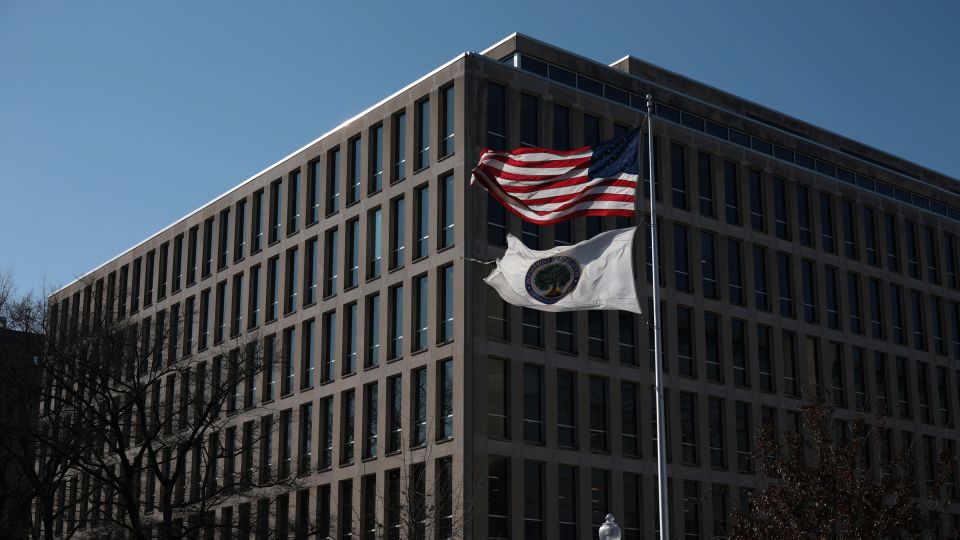
The US Department of Education headquarters seen in Washington, DC, on March 12. – Nathan Howard/Reuters
“When a student is being subjected to racial slurs in a classroom, when a school refuses to provide disability-related accommodations, when a survivor reports sexual harassment and nothing is done, or when English-learner students are denied the language services they need — those situations can’t wait,” said Mary Rohmiller, a lawyer who recently left OCR after more than five years with the department.
Julie Hartman, press secretary for legal affairs at the Department of Education, told CNN in a statement that “the Trump Administration is reorienting OCR to what it’s meant to be: a law enforcement agency, not a social-justice advocacy arm of the federal government.”
The department points to a broader effort by the Trump administration to scrutinize collegiate policies and campus speech, while threatening to cut off federal funding. That has led to settlements with a number of universities, including Columbia and Northwestern.
“These deals have rooted out DEI and unconstitutional race preferences, acknowledged sex as a biological reality in sports and intimate spaces, and implemented steps to consistently apply disciplinary policies to ensure all students enjoy a safe learning environment,” Hartman said.
Beleaguered employes in the civil rights office got what they thought was welcome news last week. The Department of Education informed employees who had been terminated earlier this year, then placed on administrative leave in an ongoing court battle, that they are to return to work later this month. The email to about 250 employees noted they are needed to address the existing caseload.
But the reprieve might be short-lived.
When asked about the staffing callback, Hartman said the move is “temporary” and that the department will continue to defend the firings in court.
Growing backlog
While backlogs at OCR are typical across many administrations, the number of cases awaiting action have grown in the Trump administration.
About 24,000 complaints to the civil rights office remain unresolved as of this week, compared to 16,500 cases pending at the end of the Biden administration. The current backlog would be even higher, according to a source at OCR, but the number of complaints filed has dropped more than 20 percent. The source attributes the decline to the Trump administration sending a message that it’s not prioritizing civil rights.
Once one of the largest federal civil rights agencies, OCR was among the hardest hit by layoffs at the Department of Education in March, as part of the DOGE-led effort to shrink the size of the federal government.
The Trump administration shuttered seven of its twelve regional offices and laid off nearly half of its staff. The office went from more than 550 employees to just over 300. Additional terminations came during the government shutdown in October, and multiple sources estimate around 100 employees remained.

The US Department of Education is seen reflected in the windows of a building after the Safeguard Students, Empower Education Rally & Press Conference at US Department of Education on April 29, in Washington, DC. – Pete Kiehart for The Washington Post/Getty Images
Moreover, before this year, there had been four enforcement directors, an important role that would typically handle the more intensive policy cases. There is now only one enforcement director for the entire country, two sources told CNN.
“Nobody’s doing any of this work,” a third lawyer in the office said, “It just seems like we are really going backward in time and that there’s a literal attempt to rollback all the protections that provide full access to education to all students.”
Several employees who were put on administrative leave told CNN they felt like they were in “purgatory” for months. While they were still being paid, they were prohibited from working – and from responding to pleas from families looking for help or updates on their cases.
For the employees that remained, the typical investigator caseload went from 35 to more than 80 cases per attorney. Some attorneys say some cases simply languish or are ignored.
“It makes me so anxious for those families that just aren’t hearing from us,” a fourth lawyer said.
“These are all real people; these are real Americans that want and need us addressing all of the cases,” the lawyer added. “These are children’s lives. These are desperate parents.”
The office is also dismissing cases at an increasing pace, court documents reveal. About 7,000 cases have been dismissed under the Trump administration – hundreds more than in the same period last year under Biden.
Meanwhile, there’s be a “huge priority shift” in what cases the civil rights office is taking up and investigating, according to the longtime lawyer, who said political appointees are pushing forward the “pet projects” of the president, as career federal employees continue working on basic cases of discrimination – with fewer resources.
The Department of Education directed OCR staff in March to immediately prioritize tackling antisemitism investigations begun during the Biden administration, but another source in the department refutes that the move drew resources or distracted from the other cases awaiting OCR action.
Students waiting
Rather than turning to the courts, which can be an expensive and time-consuming option for schools and families, OCR favors quick action. The goal is to complete most cases in a matter of months, to lessen the impacts to students as they wait for a resolution.
“Students shouldn’t have to wait years for OCR to step in and ensure they have a safe environment and equal access to education,” said Rohmiller, the former OCR employee. “Kids are harmed by these delays. They need action now. But right now, too many of these cases are falling by the wayside.”
One mother in the Atlanta area said she’s been waiting months for a resolution to her case before the civil rights office.
Her 12-year-old daughter, who is autistic and very sensitive to loud, sudden noises, has an individual education plan that accounts for her disability and dictates she needs to exit the school building before fire alarms, which are particularly dysregulating to her.
But within a week at a new school this September, the mother told CNN she received a panicked text from her daughter as a fire alarm was going off, saying she wasn’t allowed to leave beforehand.
The mother, who asked not to be named because her case is still pending, hopped in the car and drove to the middle school. When she arrived, she saw her daughter in a spiral. The young girl missed an hour of class as they worked together to calm down.
“Her face was all red – puffy. She had been crying. I could tell she was embarrassed.”
According to the mother, the school said it doesn’t have the resources to escort her daughter outside before alarms. Instead, the school gave her the fire drill schedule so she could leave her work to do it herself.
It’s a routine she may need to keep up for a while.
“I think that OCR might be overwhelmed right now,” she told CNN, “I don’t have my hopes up.”
For more CNN news and newsletters create an account at CNN.com