
By Emma Nnadozie
Fresh controversy has erupted over a proposed amendment to the Customs and Excise Tariff (Consolidation) Act that seeks to increase the excise duty on Sugar-Sweetened Beverages (SSBs) from the current ₦10 per litre to as high as ₦130 per litre—an effective hike of over 1,200 per cent.
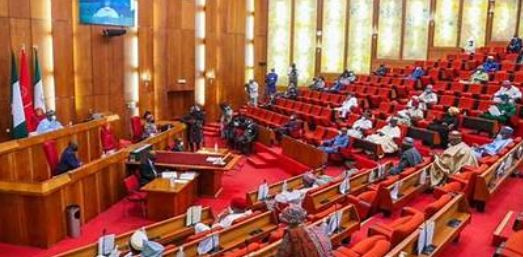
The bill, sponsored by Senator Ipalibo Harry Banigo, aims to replace the existing volumetric tax system with a percentage-based regime tied to retail prices. While public health advocates, including the Federal Ministry of Health, support the measure as a tool to curb non-communicable diseases like diabetes and hypertension and generate additional revenue for the health sector, industry operators and fiscal experts have raised serious economic concerns.
Key Organised Private Sector (OPS) groups, including the Manufacturers Association of Nigeria (MAN) and the Nigerian Association of Chambers of Commerce, Industry, Mines and Agriculture (NACCIMA), warned that the proposed hike could lead to deindustrialisation, factory closures, and the loss of an estimated 1.5 million jobs across the beverage supply chain, affecting manufacturers, distributors, and small-scale retailers nationwide.
Critics also flagged “mathematical, legal, and administrative contradictions” within the draft amendment that could complicate enforcement and trigger protracted disputes. Research cited by stakeholders suggests that raising excise to ₦130 per litre could push retail prices up by as much as 39 per cent, reduce per-capita consumption by around 29 per cent, and potentially drive consumers to cheaper, unregulated alternatives.
Beyond economic concerns, the bill has highlighted a policy clash between the Executive and the National Assembly over excise control. The Ministry of Finance maintains that Section 13 of the existing law allows the President to impose or vary excise duties in line with macroeconomic realities. Meanwhile, the National Assembly asserts its authority to amend the law and earmark excise revenues for health programmes.
Observers warn that the proposed amendment could undermine the Nigerian Sugar Master Plan (NSMP), which seeks to promote backward integration and local sugar production, by reducing demand for local beverage products. Analysts also caution that conflicting fiscal policies may affect investor confidence and hinder broader reforms aimed at improving the ease of doing business.
Stakeholders are calling for harmonised, evidence-based excise policies that balance public health objectives with economic sustainability. Proposals include conducting independent joint studies on the economic and health impacts of higher SSB taxes, adopting a tiered tax structure based on sugar content to encourage product reformulation, and ensuring transparent monitoring of funds earmarked for healthcare and disease prevention.
As the debate intensifies, industry and public health experts warn that without unified, data-driven policies, Nigeria risks a fragmented and chaotic excise regime that could harm both consumers and the economy.
The post Manufacturers cry out as Senate bill seeks 1,200% hike in SSB excise duty appeared first on Vanguard News.