
By Bayo Wahab
Peter Obi’s political fraternity with opposition leaders in the coalition-backed African Democratic Congress (ADC) may be going awry at a time the coalition needs every hand on deck to strengthen its base ahead of the 2027 general election.
When the ADC launched in July, with former Vice President Abubakar Atiku, former Senate President David Mark, and former governors Rauf Aregbesola, Rotimi Amaechi, and Nasir El-Rufai as its leaders, the coalition signified a major shift in opposition politics.
Consolidating the euphoria, the former governor of Anambra State, with his Obidient followers, joined his fellow ex-governors in the coalition to promote the ADC as the best alternative to the existing opposition parties, including his ‘estranged’ Labour Party.
Given his unprecedented performance in the 2023 presidential election, and his Obidient community at his beck and call, Obi — despite his membership of the Labour Party — was the first ADC stakeholder to run narratives to declare his presidential ambition in the coalition.

Notwithstanding his campaign against the political ‘structure of criminality’ and Nigerians’ perception of the politicians who formed the leadership of the ADC, the former governor was hopeful that the party could serve as a platform to actualise his goal of birthing a new Nigeria.
Dismissing what any Nigerian may think about the founding fathers of the coalition, Obi, seeing himself in the party’s driver’s seat, said he needed all ADC members to support him in fixing the country, including party leaders Nigerians perceived as ‘old and failed’.
“You need the experience of those who have failed and those who have succeeded to move on, and I need everyone. It is a critical experience because they know what can fail a system and they know what was wrong with the system,” he said in a TV interview.
In the interview, Obi emphasised that his ‘membership’ of the ADC is to contest for president and not to run as Atiku’s running mate.
“I’m going to contest for the President of the Federal Republic of Nigeria, and I believe I am qualified for it,” he declared.
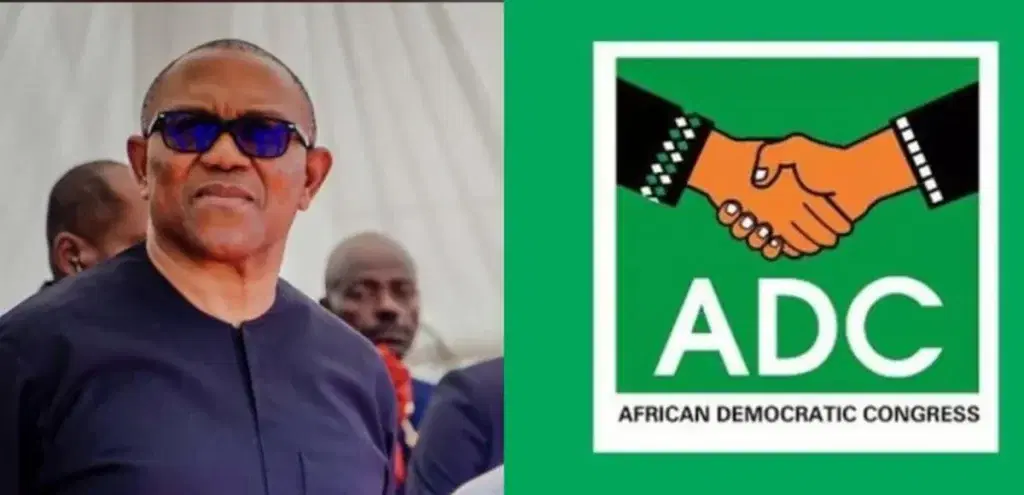
To further strengthen his agenda, Obi urged the North to trust him and vote for him, promising that his government would address the ‘criminality’ in the region if he got the chance to lead the country through the ADC platform.
“The criminality we face in the North today, I will deal with it. If I am president, the North will celebrate me. I have an idea of the problem in the North,” he claimed.
Taking a step further to endear himself to the North and its political class, Obi, considering the North-South zoning arrangement, pushed a single-term narrative, promising that his government doesn’t need eight years to fix the country.
All the while, Obi remains a card-carrying LP member, weighing his chances with the ADC. However, while popularising their principal’s one-term agenda, the Obidient Movement launched the ‘Obi-or-Nothing’ narrative, pre-empting other ADC presidential hopefuls.
The Obi-or-Nothing agenda implies that the ADC leadership must hand its presidential ticket to the ex-governor unopposed, because he’s the ‘most qualified aspirant’ and, going by zoning arrangement, the 2023–2031 presidency belongs to the Southern region.
So, whoever must emerge as the party’s presidential candidate must be a southerner, and, in the estimation of the Obidient, the candidate must be their principal.
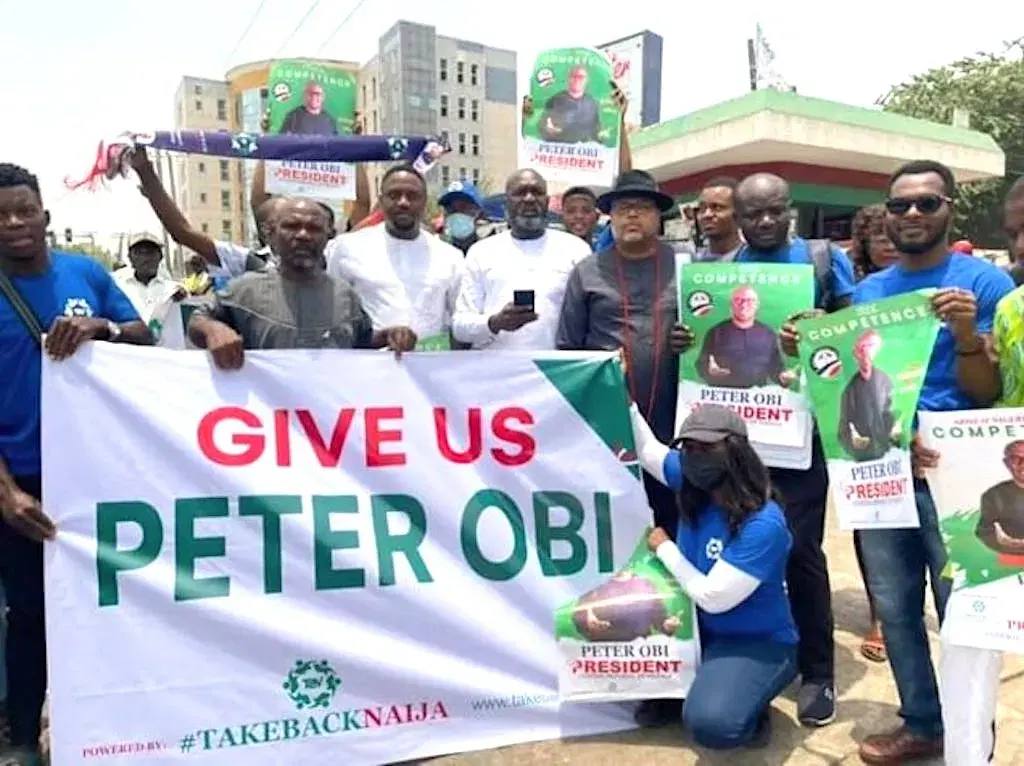
Obi enjoyed the momentum that came with the launch of the ADC as a viable opposition party. He seizes every opportunity to promote his ‘A new Nigeria is Possible’ slogan with every comment about the APC government, always going for the jugular of the ruling party, while presenting himself as the unblemished presidential aspirant no party should miss out on.
Interestingly, Obi has started singing a new song, which somehow unsettles the coalition. The current disposition of the ex-governor to the ADC gives an impression that there’s a handwriting on the wall of the party, and the inscription from the invisible hand is at odds with his agenda.
In his recent interview, the former governor of Anambra believes the ADC is faltering because its leadership has yet to settle some ‘unsigned agreements’.
“Today, we have what we can say are unsigned agreements about the presidency, unsigned agreements about rotation of offices, which is why if you say this person will come from here and this person will come from there, all those things need to be organised,” he stated.
This ‘unsigned agreement’ is what destroyed the PDP with Atiku at the centre of the crisis during the build-up to the 2023 poll.
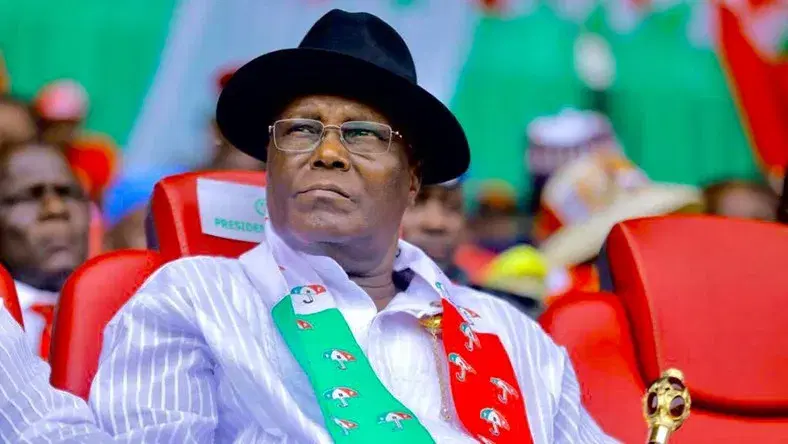
Ahead of the 2027 election, Obi, who is still an LP member, is already letting the ADC leadership know that the ‘unsigned agreement’ must be respected; otherwise, things won’t remain ‘organised’ within the coalition.
Ostensibly, Obi’s remark did not go down well with the ADC. In an interview with a national daily, Bolaji Abdullahi, the party’s spokesperson, urged the presidential aspirant to ‘calm down’, saying the coalition had not reached the stage where zoning should be considered.
‘Zoning or no zoning is not on the table now. If that is the condition for Obi to join us, maybe he should wait till that time,” Abdullahi said.
Abdullahi also expressed disappointment with the choice of words Obi used to describe the ADC’s situation.
“It’s unfortunate that he used a word like unstable, because instability is not contingent on whether we are able to make certain decisions on zoning at this point, he said.
Part of Abdullahi’s response played into the narrative against Obi by Atiku supporters, who claimed he was desperate to secure the party’s ticket without working for it.
In one breath, the ADC mouthpiece asked Obi “to make up his mind if he wants to be part of the coalition or not,” and in another, he advised him to contribute more actively to party-building efforts, especially in Anambra, “like other leaders have done in their respective states.”
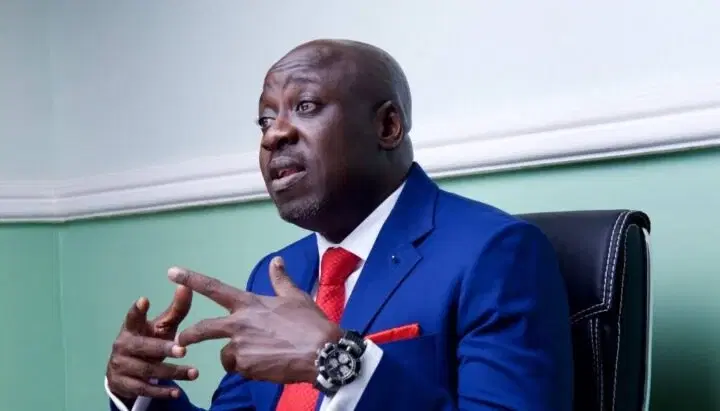
Obi may have done much by playing the opposition figure and making moves to endear himself to Nigerians ahead of the 2027 election, but, as far as the coalition is concerned, he hasn’t done well in preparing the South-East for the party.
As things stand, the ADC is largely non-existent in the South-East. This is evident in the last governorship election in Anambra State, where the ADC candidate came fifth with a paltry 8,208 votes.
Moreso, despite Obi’s open support for Donald Amamgbo in the Anambra bye-election, the ADC candidate was distant third with 2,889 votes.
In essence, the ADC is asking Obi to show workings for the party in his region and leave the party’s presidential candidacy to be determined at the primary.
Meanwhile, Atiku has officially joined the ADC. The former Vice has been holding meetings with political stakeholders in the North. He’s presenting the workings in a way that suggests the ADC presidential ticket has no one else to take it but Waziri himself.
As for Obi, his dilly-dally with the ADC and the LP will have to end at some point. Will he get the ADC ticket or run with Atiku? Will the ex-governor abandon his ‘elder brother’ once again and return to the LP? We’ll wait to see. The song may seem to have changed, but the party is not yet over.
The post Peter Obi and the ADC: Is the honeymoon already over? appeared first on Vanguard News.