
… Seeks ratification of agreement on investment protection
By Nkiruka Nnorom
Russia’s Ambassador to Nigeria, Andrey Podelyshev, has expressed his country’s commitment to reviving economic cooperation with Nigeria after over a decade of stagnation in the bilateral economic relation.
Consequently, he said that Nigeria and Russia are working to revitalise the Intergovernmental Commission on Economic Cooperation to fast-track bilateral projects between both countries.
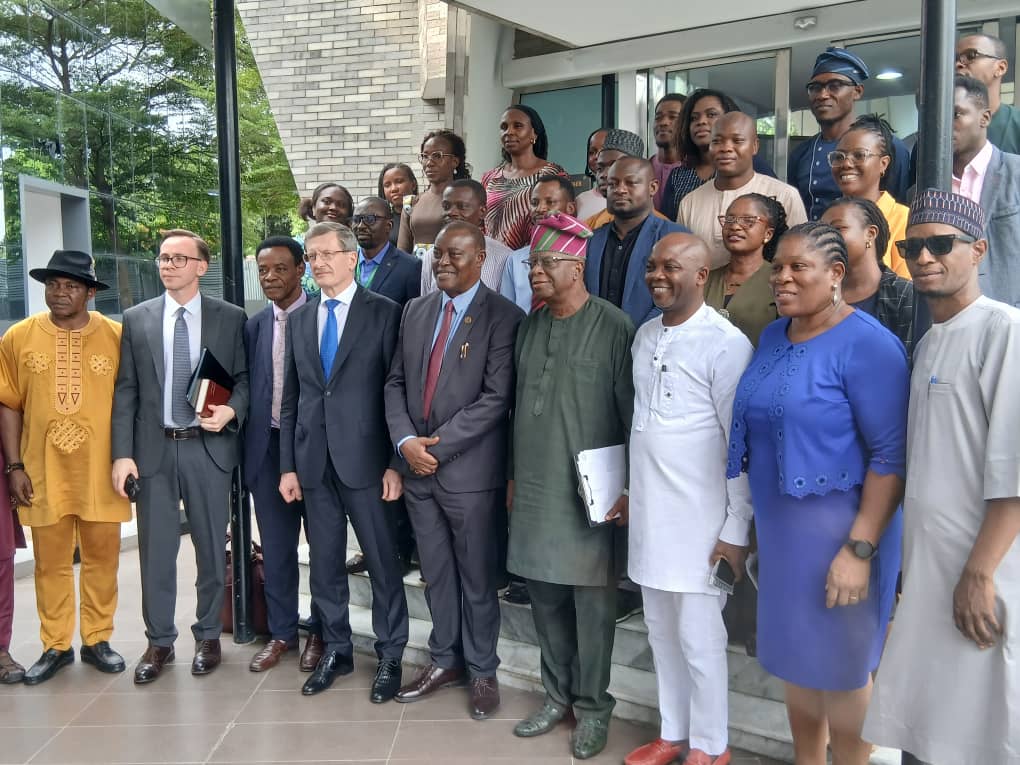
Podelyshev made the remarks while delivering a lecture at the Nigerian Institute of International Affairs (NIIA) Ambassadorial Forum with the theme: “Russia’s Foreign Policy and its Priorities: Prospect for Multilateral Diplomacy”.
Podelyshev informed that the last session of the Intergovernmental Commission was held 10 years ago in 2016, saying that Russia was now working to revive the Commission to discuss potential projects and investments.
He said that Russian businesses were interested in investing in Nigeria, but noted that the delay in ratification of agreement on mutual investment protection between both countries had continued to hinder Russian businesses from investing in Nigeria.
He stated that his country had proposed a draft agreement on mutual protection of investments, but Nigeria has yet to respond or provide a counter-draft. He, however, said that his country is working with the Ministry of Finance to expedite action on the agreement.
“I hope that we can see it in the near future and can sign it on the budgets of the next session of Intergovernmental Commission. After that, Russian business could see itself protected and could continue to find ways to invest here in Nigeria,” he said.
He also proposed scholarly and academic exchange between Russia and Nigeria institutes to promote mutual understanding.
He highlighted the growing cooperation between Nigeria and Russia in other areas, saying: “Today, our bilateral cooperation is going through a new phase of activation based on a mutual desire to diversify international ties. Back in the 1960s, the USSR provided scholarships for Nigerian students to study in Soviet universities, and tens of thousands of Nigerians obtained degrees in engineering, medicine, and other specialties in Russian.
“This tradition continues every year; hundreds of Nigerian students are admitted to Russian universities in state quarters. Diplomas obtained in technical and medical fields in the Russian Federation are highly valued. In the energy sector, our cooperation covers coal and gas in the nuclear segment.
“Russian companies are interested in participating in upstream operations and infrastructure projects, and intergovernmental input has been signed on the construction in Nigeria of a center for nuclear science and technology research.
“In industry and infrastructure, there is still potential to compete and modernize major facilities that were started with Soviet assistance, as well as to launch new German products in technology, transport, and the oil and gas industry.
“In the field of security, an agreement on military-technical cooperation is in force between Russia and Nigeria, providing for the supply of Russian military equipment and the training of Nigerian personnel.
“This helps Nigeria to strengthen its capabilities in the fight against terrorism and violence. Cooperation is also developing in healthcare, digital technologies, and culture. “Overall, we are seeing a transition from episodic projects to building long-term strategic cooperation.
He stressed Russia’s support for the reform of the UN Security Council, arguing that Africa, particularly Nigeria, should have a voice in global governance.
“From a long-term perspective, Russia views Nigeria not only as an important bilateral partner, but also as a potential global center for progress in the emerging multi-border world.
“Given its demographic trends, resource potential, and regional leadership, Nigeria has all the prerequisites to move beyond purely African missions and become one of the global centers of power.”
The ambassador emphasized the strength of BRICS countries, including China, India and Brazil, saying that joining forces with the UN could create a powerful alliance.
Earlier in his remarks, the Director-General, NIIA, Prof. Eghosa Osaghae, said that Russia had become a significant player in the global order with its presence felt in West Africa and Sahel region, but expressed interest in understanding Russia’s perspective on its relations with Nigeria and Africa, especially in the areas of security, economy and development.
He stated that the ongoing conflict in Ukraine has far-reaching consequences and welcomed efforts to bring peace in the region.
The post Russia moves to revive economic cooperation with Nigeria appeared first on Vanguard News.