
I’m a civil rights attorney. 2025 was even worse than the nightmare I braced for.
Last year, shortly after Donald Trump was elected president a second time, I wrote of being terrified of what his second term could mean for civil rights. There was little mystery about what direction a second Trump administration intended to take — in part because he had begun an assault on civil rights during his first term but also because the Heritage Foundation’s Project 2025 laid out in great details plans to further reverse hard-earned civil rights gains.
As a civil rights attorney, this year has been even worse than the nightmare I expected.
Even so, as a civil rights attorney, this year has been even worse than the nightmare I expected. The speed of the dismantling of this country’s civil rights protections is one reason. Another is the breadth of the administration’s attacks: including on police accountability measures, voting rights protections, guards against workplace discrimination and the concept of environmental racism.
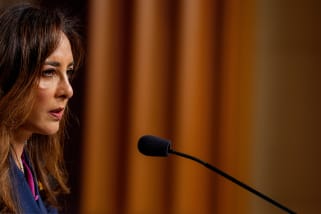
Trump made Harmeet Dhillon, an ultra-conservative opponent of accepted civil rights law, the head of the Department of Justice’s Civil Rights Division, and she swiftly withdrew the DOJ from numerous consent decrees with law enforcement agencies across the country. These consent decrees were the result of investigations — and, in some cases, litigation — that the Department of Justice bought on behalf of individuals whose rights were violated by police.
Dhillon’s withdraw from those agreements wasn’t just a disregard for DOJ staff and the Civil Rights Division’s mandate to protect federally guaranteed rights. It also was a dog whistle to police to expect wide latitude and little oversight from a president who signed an executive order this year that he said would “unleash” the country’s police.
Trump, who has continued to push the bogus claim that the 2020 election was stolen from him, signed a March executive order called “Preserving and Protecting the Integrity of American Elections,” which, among other things, demands that states implement voting procedures that require an ID proving American citizenship to vote. Voting rights advocates have long resisted that idea because many people have difficulty obtaining the type of identification the executive order requires.
That same order directs federal agencies to share private voter data with states and ties the receipt of federal funds to compliance. Not only do the provisions of this order threaten to disenfranchise millions of American voters — particularly Black people and other people of color, women, low-income voters and naturalized citizens — the measure itself is an unprecedented, and arguably unconstitutional, siphoning of power to the executive branch.
The country’s founders did not want a system of elections that could be easily manipulated by a president.
Constitutionally, the president has limited authority on how to regulate elections. This is by design, as the country’s founders did not want a system of elections that could be easily manipulated by a president. But Trump has been pressing the limits of his power by dismantling protections that were designed to protect access for all to the ballot box.
If protection from police abuse and undercutting the right to vote weren’t already enough, the trampling of civil rights in this first year has also included devastating attacks on protections against workplace discrimination. As I wrote for MS NOW last week, the volume of discrimination case brought by Black women and workers alone is enough to keep my former employer, the U.S. Equal Employment Opportunity Commission, busy. But EEOC chair Andrea Lucas is calling for white men to file workplace discrimination cases, even though white men, historically, have been the least affected by workplace discrimination.
Perhaps the scariest part is that the above examples merely scratch the surface. Several agencies, including the Environmental Protection Agency, eliminated their internal civil rights divisions, which effectively puts the investigation and potential prosecution responsibilities back to Dhillon’s upside-down Civil Rights Division. It’s been a brutal 2025.
But we should resist the temptation to sink into despair. Trump using the courts to tear at the foundation of our civil rights is an admission and a clue. Going to court when he leads the legislative branch that controls Congress is an admission that he’s not confident in his party’s ability to effectively codify these changes into law. His understanding that the judiciary can be a viable vehicle for moving his agenda against civil rights is a clue to his opponents that they too should look to the courts as a weapon against the erosion of our rights.
Fortunately, we’ve seen civil rights organizations, in an acknowledgment of major civil rights battles that were won in court, taking the Trump administration to court to defend against the president’s actions. It’s not a guaranteed path to victory, but at this point, fighting back through skillful litigation appears to be the best chance of at least slowing down the pace of attack on our civil rights.
Trump’s administration has shown no signs of discontinuing its onslaught against our civil rights in 2026. It’s possible that the most frightening part isn’t the harm that has already been done but rather the harm he’s yet to cause.
The post I’m a civil rights attorney. 2025 was even worse than the nightmare I braced for. appeared first on MS NOW.
This article was originally published on ms.now