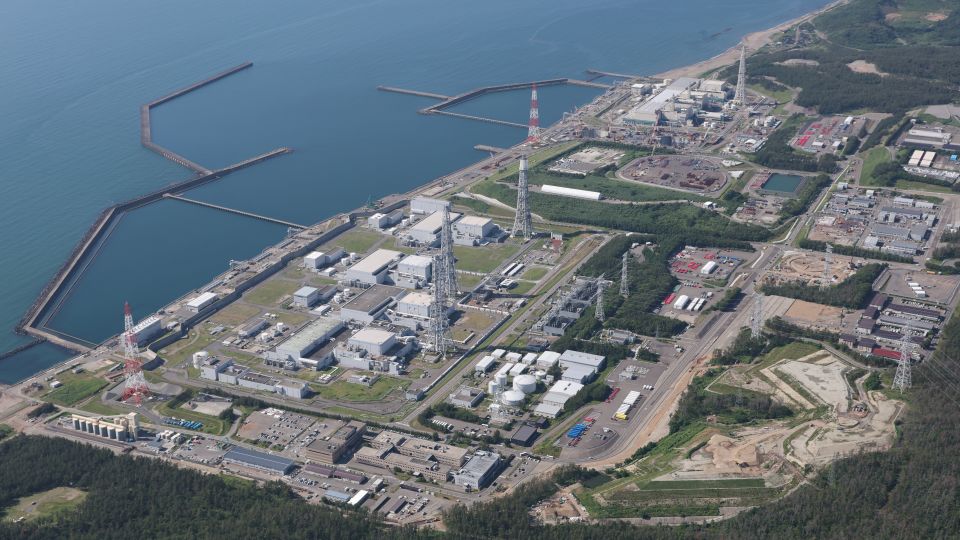

Japanese authorities have approved a decision to restart the world’s biggest nuclear power plant, which has sat dormant for more than a decade following the Fukushima nuclear disaster, in a pivotal moment as the country looks to looks to shift its energy supply away from fossil fuels.
Despite nerves from many local residents, the Niigata prefectural assembly, home to the Kashiwazaki-Kariwa plant, approved a bill on Monday that clears the way for utility company Tokyo Electric Power Company (TEPCO) to restart one of the plant’s seven reactors.
The company plans to bring the No. 6 reactor back online around January 20, Japan’s public broadcaster NHK reported.
Japan has taken a cautious approach to nuclear energy since a massive 9.0-magnitude earthquake and tsunami in 2011 triggered a nuclear meltdown at the Fukushima Daiichi plant. It was the world’s worst nuclear disaster since Chernobyl in 1986.
Following the disaster, Japan shut down all 54 of its nuclear power stations including Kashiwazaki-Kariwa, which sits in the coastal and port region of Niigata about 320 kilometers (200 miles) north of Tokyo on Japan’s main island of Honshu.
Japan has since restarted 14 of the 33 nuclear reactors that remain operable, according to the World Nuclear Association.
The Niigata plant will be the first to reopen under the operation of TEPCO, the company that ran the Fukushima Daiichi power station. It has been trying to reassure residents of the restart plan is safe.
“We remain firmly committed to never repeating such an accident and ensuring Niigata residents never experience anything similar,” said TEPCO spokesperson Masakatsu Takata, Reuters news agency reported.
Before the Fukushima disaster, Japan’s nuclear reactors had provided around 30% of the country’s electricity. Since then, Japan has increased its reliance on costly imported fossil fuels, including coal and gas, to power the country and keep the lights on.
About 60–70% of Japan’s power generation comes from imported fossil fuels, which cost the country about 10.7 trillion yen ($68 billion) last year alone.
Japanese Prime Minister Sanae Takaichi, who took office two months ago, is a strong proponent of nuclear power and has pushed to revive the crippled industry to drive down costs, and tackle inflation and a stagnant economy.
Japan is the world’s fifth-largest emitter of carbon dioxide, after China, the United States, India and Russia, according to the International Energy Agency. But it has committed to reaching net zero emissions by 2050, and renewable energy was at the center of its latest energy plan published earlier this year, with a push for greater investments in solar and wind.
The country’s energy demands are also expected to increase in the coming years due to a boom in energy-hungry data centers that power AI infrastructure.
To achieve its energy and climate goals, Japan aims to double the share of nuclear power in its electricity mix to 20% by 2040.
But the memory of the Fukushima disaster endures, and some local residents are wary of reviving nuclear power due to safety concerns.
“We know firsthand the risk of a nuclear accident and cannot dismiss it,” Ayako Oga, 52, told Reuters. Oga had settled in Niigata after fleeing the Fukushima disaster. She told the news agency that her old home was inside the exclusion zone and she still struggles with post-traumatic stress-like symptoms.
A survey published by the Niigata prefecture in October found 60% of residents did not think conditions for the restart had been met. Nearly 70% were worried about TEPCO operating the plant, Reuters reported.
On its website, TEPCO said Kashiwazaki-Kariwa had undergone multiple inspections and upgrades and that the company had learned “the lessons of Fukushima.”
The company said new seawalls and watertight doors would provide “stronger protection against tsunamis” and that mobile generators and more fire trucks would be on hand for “cooling support” in an emergency. It also said the plant now had “upgraded filtering systems designed to control the spread of radioactive materials.”
In late October, TEPCO conducted “a full round of integrity checks” at Unit 6 and declared the reactor fit for startup.
For more CNN news and newsletters create an account at CNN.com