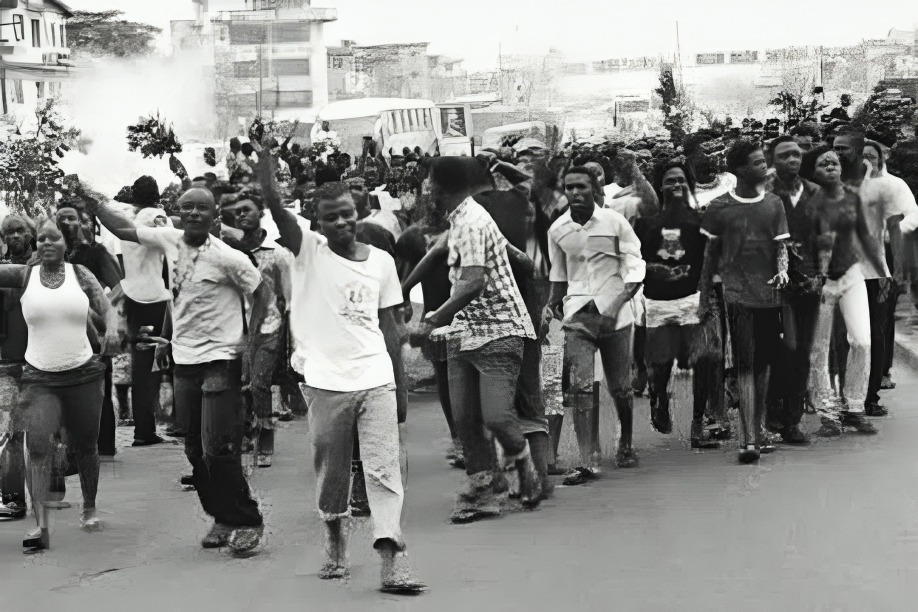

Forty-five years ago, a seemingly modest increase of 50 kobo ignited what would become the most violent and defining student protest in Nigeria’s history.
The demonstration, dubbed the “Ali Must Go” protests, altered the landscape of student activism and youth resistance in Nigeria.
The protests erupted in April 1978 after the military government led by General Olusegun Obasanjo (rtd) approved an increase in the daily cost of meals for students in federal universities.
The policy meant that students would now pay ₦2.00 per day for meal tickets, up from ₦1.50. Though the increment appeared small, it struck at the heart of students’ welfare at the time.
The announcement of the increase was made by the then Minister of Education, Ahmadu Ali, whose name would soon become synonymous with one of the bloodiest episodes in Nigeria’s post-civil war history.
Students across the country rejected the decision outright, seeing it as insensitive and imposed without consultation. At the centre of the resistance was the National Union of Nigerian Students (NUNS), led by its charismatic president, Segun Okeowo.
Determined to resist the policy, student leaders held a series of meetings in Maiduguri, Ilorin and later Calabar, where they resolved to confront the military government and demand a reversal of the hike.
As tensions rose, Ali reportedly sought to deflect responsibility by telling students that the decision was taken by the Supreme Military Council, not his ministry. But the explanation failed to calm the situation. When it became clear that the government had no intention of backing down, the students moved from dialogue to open protest.
First shot fired
The turning point came at the University of Lagos (UNILAG), where students clashed with the police on the first day of demonstrations. In the confrontation, a student was shot in the leg by the police.
Shockingly, the student later died after being refused treatment at both the Lagos University Teaching Hospital and the Orthopaedic Hospital, Igbobi.
The death sent shockwaves across the country. Okeowo immediately alerted student leaders at Ahmadu Bello University, Zaria; the University of Ibadan; and other federal universities, and within days, protests spread nationwide, transforming a campus dispute into a full-blown national crisis.
Instead of addressing the students’ grievances, the government responded with force. Soldiers were deployed to campuses, and clashes between students and security agents became increasingly violent.
More shots, more deaths
In Zaria, soldiers opened fire on protesting students, killing eight in one incident. By the end of the unrest, at least nine students had lost their lives.
The killings only hardened the resolve of the protesters. Across campuses, “Ali Must Go” became the rallying cry, with students demanding the removal of the education minister, whom they blamed for the decisions and actions that led to the deaths of their colleagues.
For more than a week, Nigerian campuses were engulfed in protests, unrest and, in some cases, looting. Eventually, the military government took drastic steps to regain control. All universities were shut down, students were ordered to return home, and the NUNS was proscribed to prevent future nationwide coordination of student protests.
Despite the heavy casualties and nationwide upheaval, the Obasanjo-led military government refused to reverse the meal ticket increase.
Okeowo expelled
In a further show of authority, the University of Lagos expelled Okeowo for his role in leading the protests, effectively ending his academic journey but cementing his place in history.
Though the students did not achieve a reversal of the policy, their courage and defiance inspired generations of activists, labour leaders and civil rights advocates.
Following his expulsion, late Chief Gani Fawehinmi, a human rights lawyer and renowned activist, took up his case and served as his legal counsel.
After the legal battle, Okeowo completed his degree at the University of Ife (now Obafemi Awolowo University), where he continued his activism. He graduated in 1982 with a second-class honours degree in Literature in English.
In January 2014, Okeowo died at the age of 73.
Even though the struggle he led did not achieve its intended goal, the late student union leader continues to be referenced whenever Nigerian youths rise to challenge policies they consider unjust.
Ultimately, the Ali Must Go saga showed that even 50 kobo could become a catalyst for national upheaval when issues of dignity, welfare and justice are at stake.
The post How 50 kobo triggered first students protest in Nigeria appeared first on Vanguard News.