
More than five years ago, I wrote in these pages of a growing trend on the left toward compelled speech — the forcing of citizens to repeat approved views and values. It is an all-too-familiar pattern. Once a faction assumes power, it will often first seek to censor opposing views and then compel the endorsement of approved views.
This week, some of those efforts faced setbacks and challenges in blue states like Washington and Illinois.
In Washington state, many have developed what seems a certain appetite for compelled speech. For example, Democrats recently pushed through legislation that would have compelled priests and other clerics to rat out congregants who confessed to certain criminal acts. Despite objections from many of us that the law was flagrantly unconstitutional, the Democratic-controlled legislature and Democratic governor pushed it through.
The Catholic Church responded to the enactment by telling priests that any compliance would lead to their excommunication.
U.S. District Court Judge Iain D. Johnston enjoined the law, and the Trump Administration sued the state over its effort to turn priests into sacramental snitches. Only after losing in court did the state drop its efforts.
In the meantime, the University of Washington has been fighting to punish professors who refuse to conform to its own orthodox values. In 2022, Professor Stuart Reges triggered a firestorm when he refused to attach a prewritten “Indigenous land acknowledgement” statement to his course syllabi. Such statements are often accompanied by inclusive and tolerant language of fostering different viewpoints in an academic community. However, when Reges decided to write his own land acknowledgment, university administrators dropped any pretense of tolerance.
Reges was not willing to copy and paste onto his syllabus a statement in favor of the indigenous land claim of “the Coast Salish peoples of this land, the land which touches the shared waters of all tribes and bands within the Suquamish, Tulalip, and Muckleshoot nations.” Instead, he wrote, “I acknowledge that by the labor theory of property, the Coast Salish people can claim historical ownership of almost none of the land currently occupied by the University of Washington.”
His reference to the labor theory is a nod to John Locke, who believed in natural rights, including the right to property created through one’s labor.
In my forthcoming book, “Rage and the Republic: The Unfinished Story of the American Revolution,” I explore the foundations of the American Republic, including the influence of Locke. The Framers would have been appalled by efforts to compel speech as an example of “democratic despotism.” The Framers saw the greatest danger to our system as coming not from a tyrant but the tyranny of the majority.
Reges came face-to-face with the rage of a majority faction defied. He was told that although the university land acknowledgment was optional, his own acknowledgment was not allowed because it contributed to “a toxic environment.”
This week, the U.S. Court of Appeals for the Ninth Circuit ruled in Reges’s favor and allowed his lawsuit to move forward. Judge Daniel Bress wrote that “student discomfort with a professor’s views can prompt discussion and disapproval. But this discomfort is not grounds for the university retaliating against the professor.”
Reges’s lawsuit, brought with the help of the Foundation for Individual Rights and Expression, is a major victory for free speech.
However, the desire to both silence and compel speech continues to grow in tandem.
In Illinois, Democrats have taken up the cudgel of compelled speech on the issue of abortion. Again, over objection that the law was unconstitutional, Democrats and Gov. JB Pritzker passed a law that said that all healthcare providers, including pro-life and religious pregnancy help centers, must extoll to their patients the “benefits” of abortion, even if they have faith-based objections to abortion.
The Catholic Conference of Illinois and other religious organizations are represented by the Becket Fund, a leading defender of religious liberty in the courts.
A district court recently struck down the law, but Illinois refuses to give up. It is appealing the case in the hope of forcing pro-life health professionals to espouse the benefits of abortions.
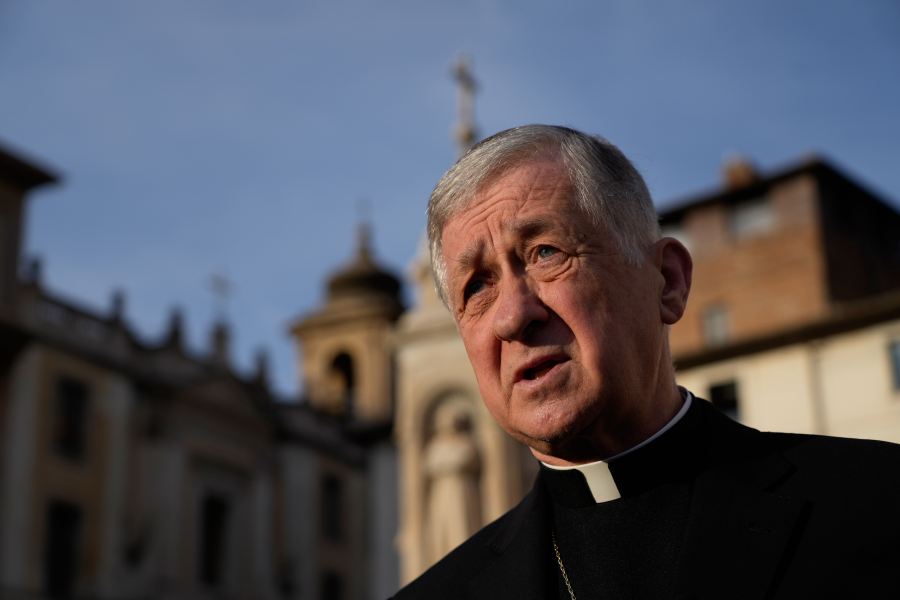
Cardinal Blase Cupich, Chicago’s archbishop, warned this week that “The Church’s pro-life mission is under attack in Illinois” and called on every Catholic to oppose “this inhumane mandate.”
Note that neither the constitutional guarantee of free speech nor that of free exercise deterred these efforts to compel speech. It is the very face of democratic despotism as the majority brushes aside disfavored views and values as “toxic” or “harmful.” It shows how, 250 years after our founding, the seeds for majoritarian tyranny remain in this (like in any) democratic system.
Jonathan Turley is the Shapiro Professor of Public Interest Law at George Washington University. He is the author of the forthcoming “Rage and the Republic: The Unfinished Story of the American Revolution” on the 250th anniversary of the American Revolution.
Copyright 2025 Nexstar Media, Inc. All rights reserved. This material may not be published, broadcast, rewritten, or redistributed.
For the latest news, weather, sports, and streaming video, head to The Hill.