
A Syria monitoring group reported that at least five people were killed by retaliatory strikes against Islamic State group targets by the United States on Friday.
The U.S. launched military strikes on Friday on multiple sites in Syria to “eliminate” ISIS group fighters and weapons in retaliation for an attack by a Syrian gunman that killed two U.S. Army soldiers and an American civilian interpreter nearly a week earlier.
The U.S. military did not say how many people had been killed in Friday’s strikes. The Syrian Observatory for Human Rights, a U.K.-based war monitor, reported that the leader and members of an ISIS cell were killed in the strikes.
U.S. Central Command, which oversees the region, described the operation as a “massive strike” and indicated that it was retaliatory in a post on X. In a follow-up post, U.S. Central Command said it used “more than 100 precision munitions targeting known ISIS infrastructure and weapons sites.”
A U.S. official told CBS News that more than 70 targets were struck.
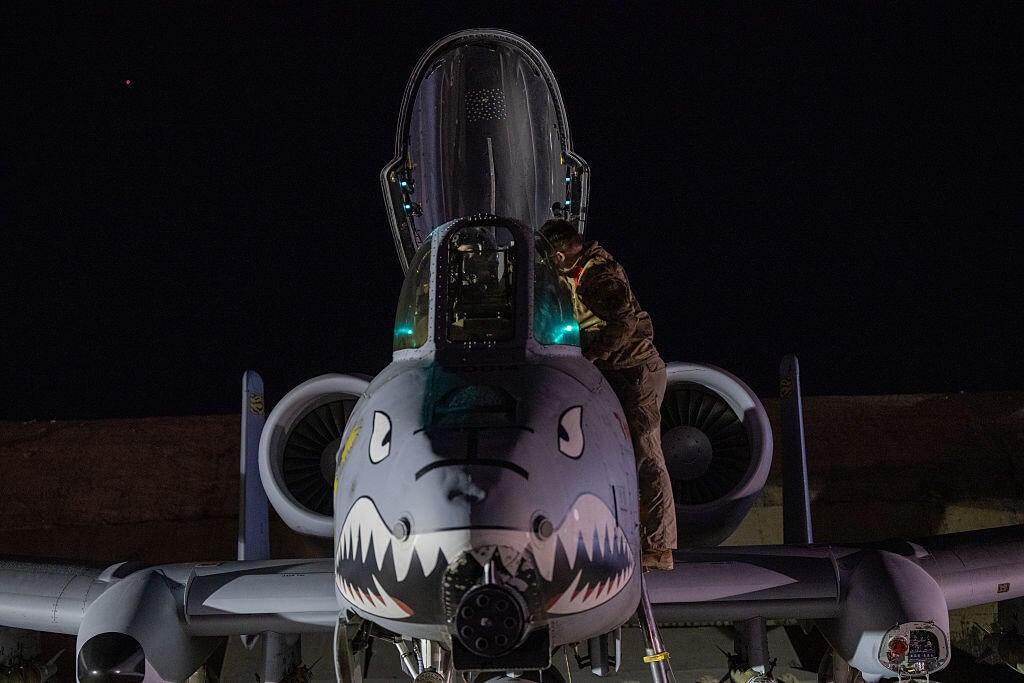
F-15 fighter jets, A-10 Thunderbolts — known as “Warthogs” — and Apache attack helicopters were used to target ISIS positions in Syria on Friday, U.S. officials told CBS News. F-16 fighter jets from Jordan were also involved in the operation.
On Saturday, Jordan confirmed that its air force took part in “precise airstrikes … targeting several ISIS positions in southern Syria.”
It said the operation aimed “to prevent extremist groups from exploiting these areas as launching pads to threaten the security of Syria’s neighbors and the wider region, especially after ISIS regrouped and rebuilt its capabilities in southern Syria.”
Central Command said that since the Dec. 13 attack in Syria, “U.S. and partner forces conducted 10 operations in Syria and Iraq resulting in the deaths or detention of 23 terrorist operatives,” adding that the U.S. and partners have conducted more than 80 counterterrorism operations in Syria in the past six months.
The three individuals were killed when, according to the Pentagon, a lone ISIS gunman ambushed them while they were supporting a key leader in Palmyra, Syria.
President Trump had pledged “very serious retaliation” after the shooting in the Syrian desert, for which he blamed ISIS. Those killed were among hundreds of U.S. troops deployed in eastern Syria as part of a coalition fighting the militant group.
The soldiers killed were identified as Sgt. William Howard and Sgt. Edgar Torres Tovar, both of the Iowa National Guard. The slain interpreter was identified as Ayad Mansoor Sakat. Mr. Trump and Defense Secretary Pete Hegseth attended the dignified transfer at Dover Air Force Base earlier this week.
Three other members of the Iowa National Guard were wounded in the attack, as well as members of Syria’s security forces, and the gunman was killed.
The assailant had joined Syria’s internal security forces as a base security guard two months ago and was recently reassigned while he was under investigation on suspicions that he might be affiliated with IS, Syrian officials have said.
The man stormed a meeting between U.S. and Syrian security officials who were having lunch together and opened fire after clashing with Syrian guards.
On Friday, Mr. Trump reiterated his backing for Syrian interim President Ahmad al-Sharaa, who the U.S. president said was “fully in support” of the U.S. strikes against ISIS.
ISIS has not taken responsibility for the attack on the U.S. service members, but the group has claimed two attacks on Syrian security forces since, one of which killed four Syrian soldiers in Idlib province. The group in its statements described al-Sharaa’s government and army as “apostates.” While al-Sharaa once led a group affiliated with al-Qaida, he has had a long-running enmity with ISIS.
Person of interest identified in deadly Brown University shooting
John Dickerson and Maurice DuBois sign off after their last “CBS Evening News” broadcast
Trump administration official says only part of the Epstein files will be released today