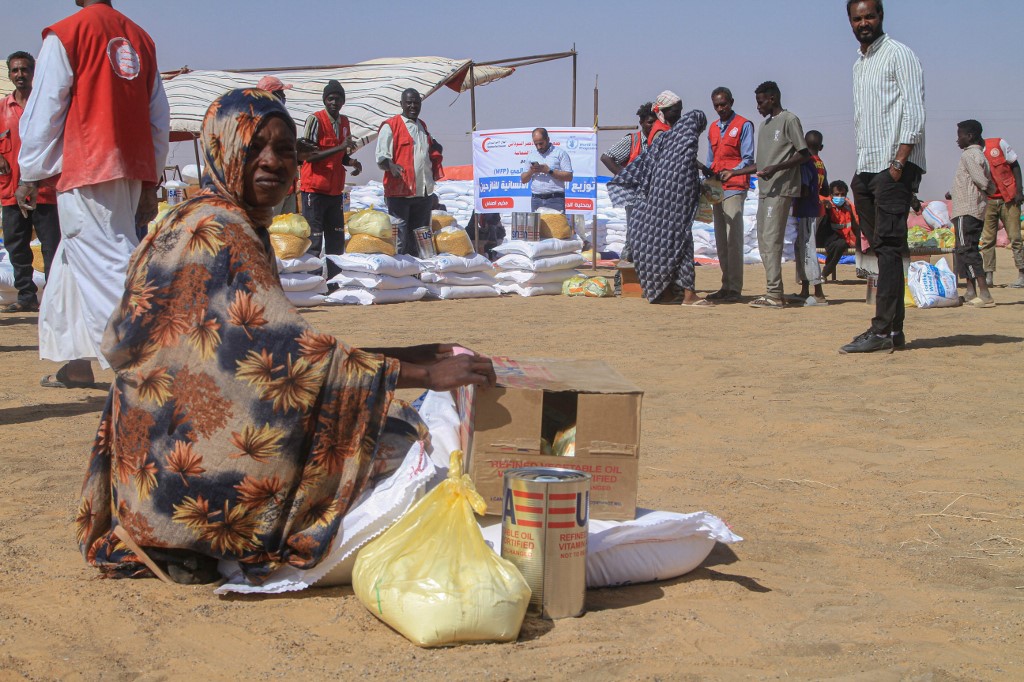

As fighting continues and access to aid remains restricted, civilians in Sudan are bearing the heaviest cost of a war with no end in sight.
The war between Sudan’s military and the Rapid Support Forces (RSF) paramilitary erupted on April 15, 2023, unleashing a wave of violence that has led to one of the world’s fastest-growing man-made humanitarian crises.
Both sides have been accused of war crimes and crimes against humanity, while the RSF has been implicated in atrocities in Darfur that the United Nations says may amount to genocide.
According to the latest figures from the UN, at least 21.2 million people are facing high levels of acute food insecurity, 9.5 million people are displaced internally, 4.35 million people have fled the country, and 10 million children are out of school with classrooms destroyed, occupied, or unsafe to reach.
Women and girls face heightened risks, with survivors reporting mass executions, torture, rape, sexual abuse, and ransom demands by RSF fighters.
(Al Jazeera)
More than 9.5 million people displaced internally
According to the International Organization for Migration (IOM), Sudan is facing the world’s largest humanitarian and displacement crisis, with more than 9.5 million people internally displaced across 10,929 locations in 185 localities, spanning all 18 states of Sudan.
Most of the displaced have sought refuge in South Darfur (1.84 million), North Darfur (1.75 million) and Central Darfur (978,000). More than half, or 51 percent, of those displaced are children.
Even before the current war began, the IOM estimated that more than 2.32 million people had already been displaced in Sudan, mostly in Darfur, due to years of conflict and climate-driven crises.
Since April 2023, an additional 7.25 million people have been displaced within Sudan, including around 2.7 million from Khartoum state, 2 million from South Darfur and a similar number from North Darfur.

(Al Jazeera)
More than 4.3 million refugees
In addition to 9.5 million internally displaced people, an estimated 4.34 million are refugees in neighbouring countries, bringing the total number of displaced across Sudan to about 14 million – more than a quarter of the country’s population of 51 million.
Most have sought refuge in Egypt (1.5 million), South Sudan (1.25 million) and Chad (1.2 million). Of those who fled, about 70 percent are Sudanese nationals, while 30 percent are non-Sudanese.

INTERACTIVE – Cross-border movement from Sudan – NOVEMBER 5, 2025-1765797181
Millions facing emergency levels of hunger
In September 2025, the Integrated Food Security Phase Classification (IPC) estimated that 21.2 million people, 45 percent of Sudan’s population, faced high levels of acute food insecurity. This includes 6.3 million people in Phase 4 or emergency conditions and 375,000 experiencing Phase 5 or famine-levels of hunger.
Famine is the worst level of hunger and occurs when people face severe food shortages, widespread malnutrition and high levels of death due to starvation.
El-Fasher in North Darfur and the besieged town of Kadugli in South Kordofan have been classified as being in famine. Conditions in the besieged nearby town of Dilling are believed to be similarly severe, with supply routes cut off and shortages worsening by the day.
The RSF took the city of el-Fasher, the capital of the state of North Darfur, in October after an 18-month campaign of siege and starvation. The city was the Sudanese army’s last stronghold in the region.
Those who fled el-Fasher, particularly children, are arriving in nearby towns like Tawila in acutely malnourished condition.
The UN Human Rights Office warned that the massacre at the end of the siege forced people to survive on peanut shells and animal feed, while satellite imagery showed bloodstains from mass killings and executions of civilians based on their ethnicity.

(Al Jazeera)
Healthcare infrastructure devastated
The war has shattered Sudan’s public infrastructure, including its health system. Fewer than 25 percent of hospitals are operational, leaving millions with no access to medical care amid rising disease outbreaks.
The World Health Organization has documented 200 attacks on health facilities and personnel, with 20 ambulances severely damaged or destroyed.
With healthcare access so limited, cholera has spread across Sudan, causing over 123,000 confirmed cases and more than 3,500 deaths.

(Al Jazeera)